The Angolan Civil War is a complicated historical event that held great significance in the Cold War. Not only were there three opposing factions within the conflict, but other nations were heavily invested in the war; Cuba, South Africa, the United States, the USSR, and China were all involved to varying degrees. In this post, I will be focusing on why South Africa elected to become directly involved in the Angolan War. They supported the two smaller, anti-communist factions, UNITA and the FNLA, in their fight against the socialist MPLA government (Hallett 1978, 353). The apartheid state was motivated to get involved in Angola by a myriad of factors, including outside pressure, economic investments, anti-communist sentiments, and counter-insurgency efforts.
Some of the Key Figures of the Angolan Border War:
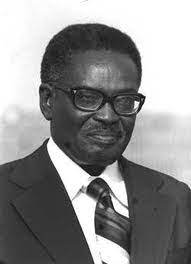
Agostinho Neto, the leader of the MPLA during the Angola Border War.
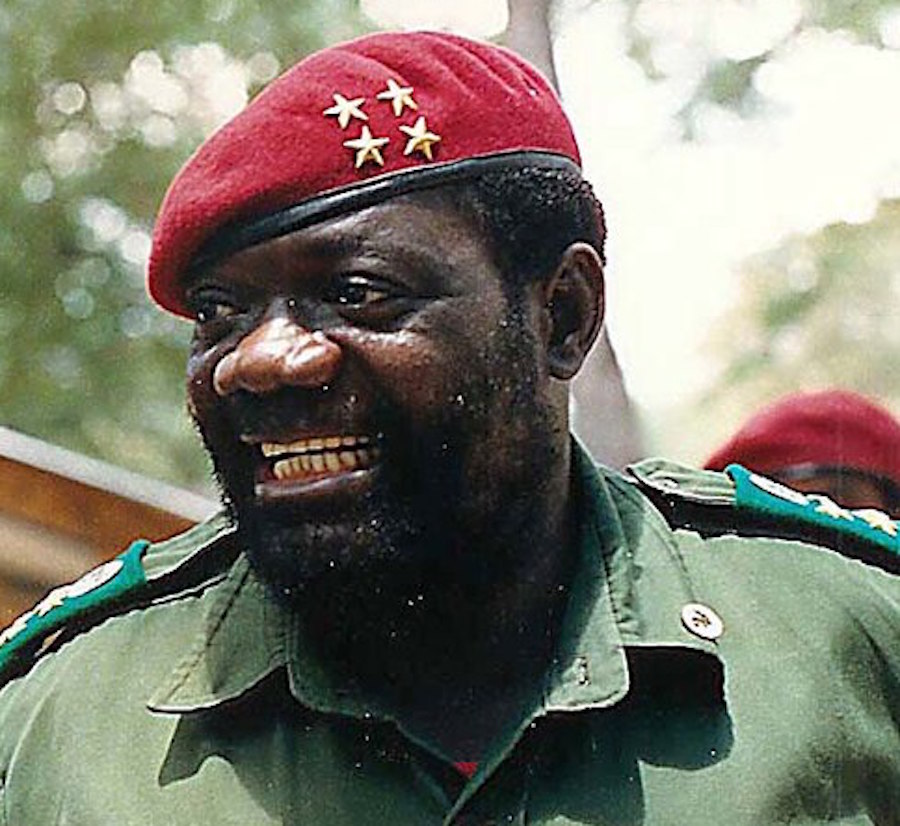
Jonas Savimbi, the charismatic leader of UNITA.
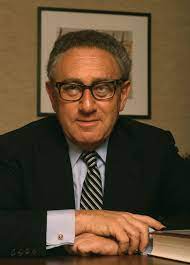
Henry Kissinger, US Secretary of State from 1973-77.
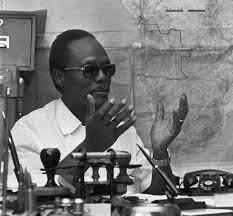
Holden Roberto, leader of the FNLA.
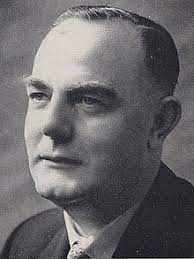
John Vorster, prime minister of South Africa 1966-1978.
SWAPO
The first answer that one will find when researching this topic is that South Africa was attempting to secure its position in South-West Africa, now known as Namibia (Hallett 1978, 351-53; El-Khawas 1977, 37). Their main concern was that of the South West African Peoples Organization, known as SWAPO, which sought to win back Namibian independence from South Africa (Shigwedha 2014, 1275). The South African government had been in conflict with this organization for some time, but it escalated after Angola won its independence and offered a staging ground for SWAPO forces. South Africa was occupying Namibia against the wishes of the United Nations, and SWAPO had more popular international support than South Africa itself did, which made the government anxious to deal with the threat (Larsdotter 2014, 1027-28). Internal rebellion and civil unrest were South Africa’s main national security concerns, and SWAPO was perpetrating these within Namibia as well as encouraging further unrest within South Africa itself (Gutteridge 1980, 29). All of these factors motivated South Africa to reach into Angola in an attempt to wipe out SWAPO. SWAPO was a defining feature in South Africa’s diplomatic relationship with Angola and was used as the official reason for South Africa’s continued aggression towards Angola (Saunders 2011, 105). Their counter-insurgency methods included supporting the UNITA rebel faction in Angola, making small-scale guerilla attacks on SWAPO bases, and reinforcing the Angola-Namibia border (Larsdotter 2014, 1030-31). Had SWAPO not used Angola as a staging ground, it is unlikely that South Africa would have remained involved in the Angolan Civil War for as long as it did.

SA soldiers of the notorious 32nd battalion.
Anti-communist Ideals
While SWAPO is a large reason for South Africa’s incursions into Angolan territory, another significant reason was the fact that Angola was ruled by a communist party, the MPLA. South Africa was run by a staunchly anti-communist party that believed in stopping the spread of socialism (Graham 2011, 29). Perhaps they wanted to prevent socialist governments from forming in the nations around them because their ideals would help motivate the anti-apartheid movements within South Africa. I interviewed Nico Coetzee, a former South African Air Force Pilot who flew in the Angola War, and asked him why he believes South Africa went to war against Angola. He responded with the following:
“It was all about the communists backed by Cuba. South Africa needed so-called buffer states to keep the communists away, who wanted to de-stabilize our country and were supported by communists within South Africa,” (Coetzee, 2022)
While this is a personal conviction, it demonstrates that South Africans were concerned with the effect that communism could have in destabilizing their carefully constructed apartheid system. The government most likely wanted to portray their involvement in Angola as anti-communist because it was the most respectable and unselfish of their motivations. They were partially successful in their efforts; An American newspaper, the Gainesville Sun, released an article in 1981 that names anti-marxism as one of the motivators behind South Africa’s involvement (Gainesville Sun 1981, 10A). However, that same article also acknowledges that South Africa was either trying to wipe out SWAPO or aid UNITA’s rebellion efforts, so even the Americans understood that South Africa did not have any singular motive (Gainesville Sun 1981, 10A). Anti-marxism certainly was not the chief motivator behind the South African involvement in Angola; rather, it was the underlying reason that gave merit to all of their other motivations. Had the MPLA not been a communist party, I doubt the South African government would have been near as concerned about them. Cuba would also not have gotten involved if the MPLA had not been communist, as they intervened only because they were protecting a fellow communist nation.
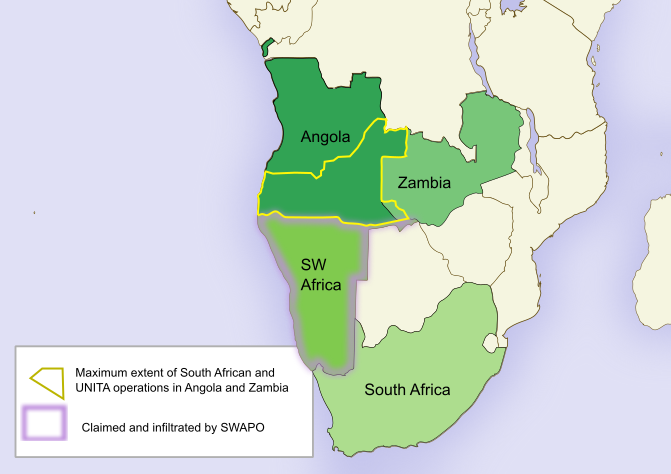
This map shows just how far the SADF and UNITA forces were able to progress before Cuban intervention turned the tide. Taken from Wikimedia Commons.
Economic Motivations
South Africa also had significant economic reasons for wanting a sympathetic government in Angola. Before the Portuguese departed from Angola, they worked closely with the South African government to build several hydroelectric dams along the Kunene River (Hallett 1978, 350). There is also a railroad of tremendous regional significance, the Benguela Railway, which was used to transport trade goods from Zambia and Zaire (now the Democratic Republic of Congo) to the Atlantic Ocean (El Khawas 1977, 37). These nations maintained good relations with South Africa, and Angola could use the railway as leverage to force them to cut off ties with SA (El Khawas 1977, 37-8).
American Influence
The final and most complex reason that South Africa became directly involved in the Angola Border War was American influence. Since this conflict took place during the Cold War and involved a new communist state, it is only natural that the United States of America should become involved. The USA could not get directly involved in the war because their involvement in Vietnam had just drawn to a close and they were not eager to get involved in another war. However, the CIA allegedly was given “$50 million in total to be used to train, equip, and transport anti-MPLA troops” (Westad 2007, 228). Alongside this covert involvement, the South African government claims that the USA supported their invasion of Angola and encouraged them to take action (Westad 2007, 229-30; Graham 2011, 33). When the South Africans invaded Angola and subsequently received no support from the United States, they felt betrayed, and P.W. Botha even told Kissinger that he “left me [Botha] in the lurch” (Graham 2011, 33). While the United States may have privately supported South Africa’s anti-communist actions, given the existence of apartheid and the international shunning of South Africa, any public action taken to support them would have been highly unpopular. It is interesting to note that the Angolan government reached out to the Americans later, in 1978, pleading for them to take diplomatic actions to pressure South Africa into a ceasefire (Gleijeses 2013, 98-99).
In the end, whatever support Henry Kissinger may have suggested the United States may provide did not materialize, but it provided enough incentive to help push South Africa into the conflict. In fact, the South African government claimed it was only acting upon the request of several other nations, including Zambia, Zaire, and the USA (Graham 2011, 33). While outside influences were a significant factor in South Africa’s decision, it is clear that they also had several internal motivators to invade Angola.
Conclusion
South Africa’s involvement in Angola is a result of a complex set of motivators and influences, rather than any one reason. The South African government did not make the decision lightly, so they must have felt that they had sufficient reason to send troops into Angola. The South African government decided to become directly involved in Angola to eliminate SWAPO bases in Angola, partially for economic gain, motivated by anti-communist sentiments, and they were encouraged by the USA and UNITA. It is difficult to say if any three of these reasons would have been sufficient but with the reasons given the South African government was able to convince its populace that the fight was worthwhile for more than a decade.
Resources:
“Angola–Its Past, Its Present.” Google News Archive Search. Gainesville Sun, September 3, 1981. Accessed on November 13, 2022. https://news.google.com/newspapers?nid=1320&dat=19810903&id=l7QRAAAAIBAJ&sjid=p-kDAAAAIBAJ&pg=6982%2C226144.
Coetzee, Nico. Personal Interview on Angolan Border War. September 30, 2022.
El-Khawas, Mohamed A. “South Africa and the Angolan Conflict.” Africa Today 24, no. 2 (1977): 35–46. http://www.jstor.org/stable/4185676.
Gleijeses, Piero. Visions of Freedom: Havana, Washington, Pretoria, and the Struggle for Southern Africa, 1976-1991. Chapel Hill: The University of North Carolina Press, 2013. doi:10.5149/9781469609690_gleijeses.
Graham, Matthew. “Covert Collusion? American and South African Relations in the Angolan Civil War, 1974–1976.” African Historical Review 43, no. 1 (2011): 28–47. doi:10.1080/17532523.2011.596619.
Gutteridge, William. “South Africa’s Defence Posture.” The World Today 36, no. 1 (1980): 26–31. http://www.jstor.org/stable/40395399.
Hallett, Robin. “The South African Intervention in Angola, 1975-76.” African Affairs 77, no. 308 (1978): 347–86. http://www.jstor.org/stable/721839.
Larsdotter, Kersti. “Fighting Transnational Insurgents: The South African Defence Force in Namibia, 1966–1989.” Studies in Conflict & Terrorism 37, no.12 (2014): 1024–38. doi:10.1080/1057610X.2014.962440.
Saunders, Christopher. “The South Africa-Angola Talks, 1976-1984: A Little-Known Cold War Thread.” Kronos, no. 37 (2011): 104–19. http://www.jstor.org/stable/41502447.
Shigwedha, Vilho Amukwaya. “The Relationship Between UNITA and SWAPO: Allies and Adversaries.” Journal of Southern African Studies 40, no. 6 (2014): 1275–87. https://www.jstor.org/stable/24566732#metadata_info_tab_contents.
Westad, Odd Arne. The Global Cold War: Third World Interventions and the Making of Our Times. Cambridge: Cambridge University Press, 2007. https://search.ebscohost.com/login.aspx?direct=true&db=nlebk&AN=511691&site=eds-live&scope=site.