For the last two weeks, I’ve had the privilege of teaching an entire unit of grade 9 English. The core learning standards of this unit were to develop students’ discussion and essay writing skills. My favourite part was that I was able to journey alongside students for the entire learning progression: from their first essay outline to their final essay submission. I was part of the formative and summative assessment process.
The artifacts.
Straight, Curvy, Mountainous
The language Karen and I use to scaffold learning for various students in English 9 is “straight ahead, curvy, and mountainous.” Even though all students are aiming for the same learning target, there are various avenues or “paths” they can choose to take depending on their comfort level.
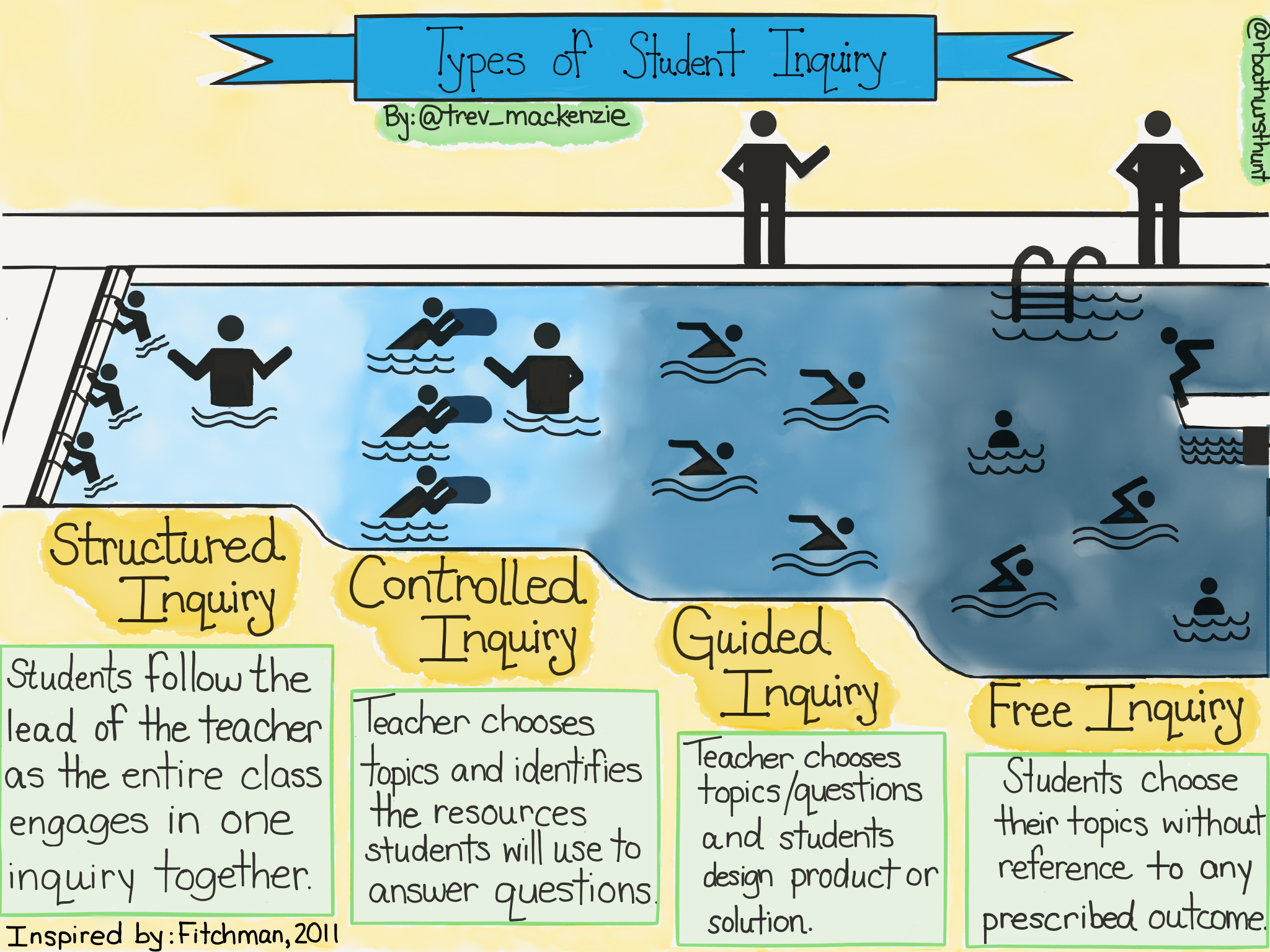
In one of my note-taking activities early on in the unit, I showed students three different questions they could focus on. Students chose which one they would like to aim for. This was one way I scaffolded the learning for them and gave students choice about which goals they might like to set for themselves, depending on the level they believe they are capable of.
Choice Board extension tasks
To offer my my students opportunities to apply their learning in creative contexts, I created a Choice Board. This gave extending students further activities to work on while the rest of the class finished up required class time activities. The Choice Board was an ongoing extension opportunity, and I continued to add options to the board throughout the unit as we tackled new topics. Students viewed videos and responded in creative ways by writing stories, letters, or even spoken word poems with the same themes.
With the permission of my students, I have a few exemplars from the Choice Board to share here.
- One student wrote a story about the end of the world as a result of further advancements in technology.
- A second student wrote and recorded a spoken-word poem about the effects of social media.
- A third student also wrote this slam poem about social media and the importance of remaining present.
Peer-feedback opportunities
On two occasions towards the end of the unit, I guided the students through peer-feedback activities. In the first activity, the students used a single-point rubric to evaluate each others’ essay plans (see here for real student examples). This was a helpful way for them to grapple with the learning targets for an essay outline and also offer their peers support. In the second activity, the students took on the role of the teacher to give feedback on each others’ full essays using the comments feature in Google Docs. I gave them a worksheet with feedback prompts to help. With both instances, I emphasized that students’ ability to give good peer-feedback shows me that they understand the performance targets well.
Feedback for Ms. Sommer
Last week, I asked students to complete a “Thursday Check In.” This was a brief Google Form assignment they completed as an attendance task first thing in the morning. In the Check In, students shared one piece of learning they were most proud of from the week and which assignment proves the development of that learning target.
In the next part of the form, I asked students about what I did to best support them this week.
My second question asked them what I could do next week to better support them as learners.
After they completed this form, I emphasized the reality that, as a student teacher, the advice/feedback from my students is most valuable to me. They best understand the effect my teaching has on their learning and well-being.
Self-assessment
Throughout the unit, students worked on their group discussion skills. We came up with a list of criteria for discussion skills as a class and conducted student-led discussion activities to practice them. After one of the discussion activities, students completed a Google Form with the discussion criteria, identified a specific skill they were proud of achieving, and set a tangible goal for future discussions.
At the end of the unit, I did a quick review of all the learning goals we covered and asked students to complete a Google form with all the unit learning targets. Students rated themselves on the proficiency scale for achievement of these learning goals.
Why it matters.
The reality of student teaching is that I am learning intensely, right alongside my students. With the hope that my students would develop as learners, I tried to model initiative, self-reflection, and focus on learning targets in my practice.
As I designed activities to develop various competencies in this unit, I wanted students to have a voice in the assessment process and in how they applied their learning in creative contexts. I wanted students to develop their metacognition and ownership of learning. And by doing that, I was making my role as the teacher more manageable and strategic, because they were partners in the assessment process.
In giving students choice opportunities to extend their learning to creative contexts (Choice Board), students who may otherwise have felt bored or under-challenged were more engaged and able to exhibit what they were truly capable of. The extension opportunities gave the “extending” students an avenue through which to take their learning further. I was amazed at the results, and I felt so lucky to be able to see what they were capable of in a creative context.
By wrestling with learning targets through peer and self assessment tasks, the students practiced the routine of reflecting on their own learning. Choosing which scaffolded avenue to take in some activities (straight ahead, curvy, mountainous) also allowed students to take ownership of their learning by setting their own goals based on what they are comfortable with. By also asking for the students to give me feedback on my skills as a teacher, I hoped to model a sense that we never stop learning: life is a journey of continued lessons.
I wanted to eliminate the notion that I was the “all-knowing” teacher who was the only voice in the assessment process. While it’s true that the teacher has the last say in what grade gets recorded in CheckMyProgress, I wanted to hear back from students about where they were at in the learning journey. Reflecting on your own learning and thinking (metacognition) is a valuable real-world skill that I want my students to develop.
Next steps.
As I marked my students’ summative assignments for this unit, I looked over their self-assessments of learning standards and discussion skills. I felt conflicted on how to visualize these results in CheckMyProgress for parents to view. I ended up only logging students’ proficiency rating of their discussion skills (1-4) and a completion mark for their unit self-assessments. Both of these “marks” were unweighted and did not contribute to their final marks.
If I was teaching in a semester or linear system, I would convert these assessment strategies into the basis for “celebration of learning” conferences with my students at the end of the course. With all the marks of various assignments (including formative and summative tasks), self-assessment tasks, and other activities such as the Choice Board extension task, students would come with a grade proposal worded in the way, “Ms. Sommer, I think I deserve [this grade] because of [evidence 1], [evidence 2], and [evidence 3].” Together, we would discuss the mark and come to an agreement about their final mark for the course. My hope is to try to integrate one form of this “exit conference” during my full immersion practicum in the spring. Whether that is to negotiate a grade for one unit or for the entire course, I would love to take my practice of giving students a voice in assessment a step further by sitting down for one-on-one conferences with them.
Finally, I think the Choice Board extension idea was one that I would love to carry forward into my teaching of Biology and English in the coming few weeks of practicum and my full immersion in the spring. It’s a fantastic way for students to gain choice and voice, and to give extending students an opportunity to show their abilities in the way they wish.
Nathan and I have already designed a few Choice Board projects (one on circulation and the other on respiration) for the final units on body system in Anatomy & Physiology 12. These projects are peer-assessed before they are submitted, and students request 1-2 topics out of 6 that they would like to be summatively assessed on. This is a method of giving students voice and choice in their learning that I will definitely try to keep carrying forward in my teaching. (For the record, summative tests still ensure all students are learning the foundational concepts of each unit on body systems. The Choice Board projects are ways students take their learning further by applying it to other contexts.)
Professional Standard #1: Educators value the success of all students. Educators care for students and act in their best interests.
Professional Standard #3: Educators understand and apply knowledge of student growth and development.
Professional Standard #5: Educators implement effective planning, instruction, assessment and reporting practices to create respectful, inclusive environments for student learning and development.
Professional Standard #7: Educators engage in professional learning.