Unit 1 Taking an Artistic Inventory
Unit Overview:
- Gather images of all the artwork you’ve made over the past three years into a single folder on your desktop.
- Browse through the options for reflecting on your creative process: Good Time Journal, Creative Autobiography or the Ignatian Examine. Select one to be your guide for the inventory process
- Read the PDF for your chosen guide and complete the reflection exercise
- Read through the artist manifestos, note the language that resonates with you
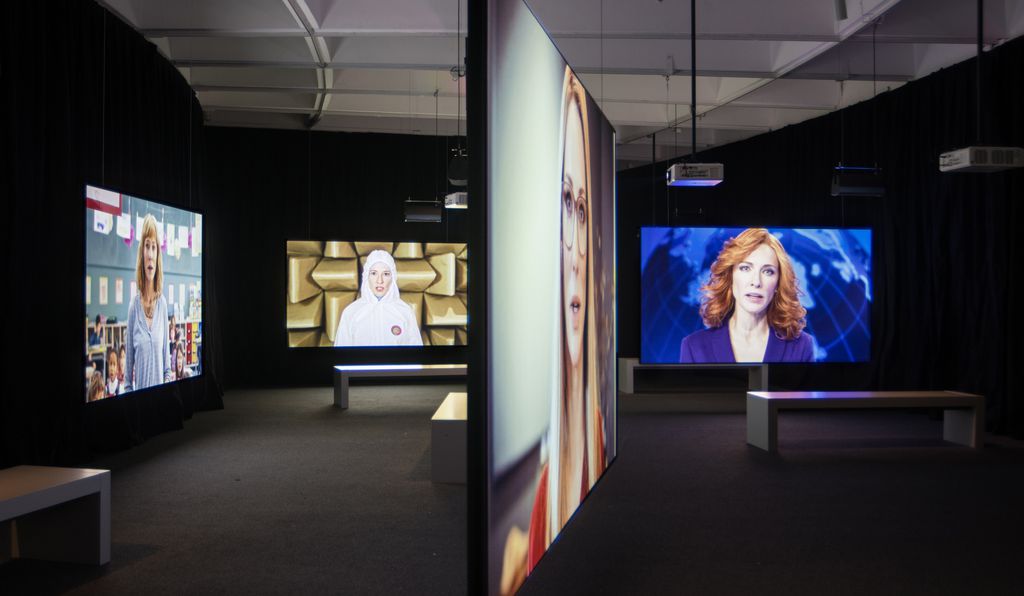
- Watch the film Manifesto by german artist Julian Rosefeldt
During my graduate fine arts training I absorbed an idea that there was a right way to be an artist. The “right” way required going into the studio every day and working alone for 6-8 hours and producing work to hang in galleries. This worked okay for me when I was in school, in fact I loved it. I was surrounded by professors who challenged me and artist colleagues who were a source of constant inspiration. But it was a different story once I had graduated and was out on my own trying to live this solitary artist life. It didn’t seem to fit. I envied filmmakers and theatre artists who got to work in teams and support one another. It was then that I started to find other artists to collaborate with; people to spur on my creative practice and push my work in interdisciplinary directions. I began to explore performance, I worked on a theatre production with a performing arts collective and I began to expand my ideas of what a creative practice could look like. I followed what gave me life and it led me to some surprising places!
This week’s exercises are an invitation to get to know yourself and your creative practice better. What creative practices “nourish” you? What drives you? What discourages you? In order to cultivate a sustainable creative practice we have to get to know ourselves, to figure out what makes us tick, what motivates us to work, what stops us in our tracks.
Making the work you want to make means finding nourishment within the work itself.
-Bayles & Orland
We come up against a lot of roadblocks when creating. These roadblocks can be internal or external. Sometimes the roadblock is discomfort with uncertainty—not wanting to start a project unless we know it will work out. Sometimes it’s materials not behaving the way we expect. Sometimes it’s comparing ourselves to others. Sometimes it’s getting a discouraging critique. Sometimes too much praise puts up a block. In order to have a sustainable creative practice we need to learn to identify and move through these blocks.
This week you are invited to reflect and take stock of the past three years of your art and design training here art TWU (and beyond if you like!) Set aside a generous amount of time this week to dig into this reflection. Make space for it. This is important! Reflection is essential in times of transition change. As you prepare to take your next big steps I invite you to honour your learning over the past years and to discover the directions that your practice might be leading you in the coming year and beyond.
In large measure becoming an artist consists of learning to accept yourself, which makes your work personal
Bayles & Orland
Personal Inventory Beginnings
The purpose of this exercise is theefold:
- To develop reflective strategies that will accompany you throughout your creative life
- To help you reflect on the projects that have nourished you and allow those projects to point you to your next creative explorations.
- To help you identify what hinders your progress as an artist or designer. What blocks your sense of flow? This will allow you to make positive changes to support your creative work.
good time journal
Summary: Stanford design professors Burnett and Evans guide you through a reflective exercise that uses design thinking principles from human centred design to help you “design your life.” However, I think this exercise is just as useful for helping you design a senior studio project.
Read the chapter “Wayfinding” from Designing Your Life.
Access the Good Time Journal Worksheet if you would like to print it out.
If you choose this exercise, gather all your work, write down a list of all the classes you’ve taken and any other art and design experiences you’ve had. Then work through each of the experiences with the Good Time Journal worksheet. Pay attention to patterns of energy and engagement.
For a great summary of Burnett and Evans’ work on life design watch this.
Artist Manifesto
The artist manifesto has been a hallmark of modern art movements throughout the twentieth century. The practice of writing artist manifestos has largely gone out of fashion in the twenty-first century. Their bold, sweeping statements smack of modernist hubris. However, writing a manifesto can be a great way to get in touch with your core beliefs about art and design practices in language that is direct and unapologetic. Writing a manifesto can help you answer the “so what?” of your work.
Julian Rosenfeldt’s brilliant film and video installation Manifesto captures the power of the language of twentieth century artist manifestos.
Take a look at some excerpts from important art manifestos below. Pay attention to the language that resonates with you.
“10 Game Changing Manifestos” from The Royal Academy of Arts Blog
“10 Inspiring Art Manifestos” from Widewalls
Don’t shy away from powerful language. For some great advice on writing a manifesto read “Manifestos: A Manifesto” from The Atlantic
 This work is licensed under a Creative Commons Attribution 4.0 International License.