The trumpet is one of the oldest instruments in the world, with the first written records of the trumpet dating back to biblical times. It was also a very popular instrument and early models can be found all over the world in places like China, South America, Scandinavia, Asia, and Egypt. The trumpet has undergone a massive transformation throughout its lifetime, both in the way it looks and in the way it is used.
The Physical Instrument

Earliest trumpets would consist of blowing inside of hollow objects, such as animal horns and conch shells, but by 1500 BC, craftsmen began to create trumpets out of wood, metal, and ceramics. These instruments were long and straight. They also had no valves, meaning their range and the types of notes they could play was limited. Players would have to adjust the shape of their lips for each note they played.

By the middle ages, players wanted a bigger range, but the only way this was possible was to make the instruments longer. Doing this would have made the instrument impossible to carry! Around this time, metalworking technology advanced to the level where they could now bend metal back on itself. Instrument makers implemented this when creating trumpets, and the “natural” or “Baroque” trumpet was born. This model bent around on itself, making the tubing longer (and giving players the ability to play more notes) while still making it easy to hold. With this development, composers such as Bach, Handel, and Vivaldi began composing for the trumpet.
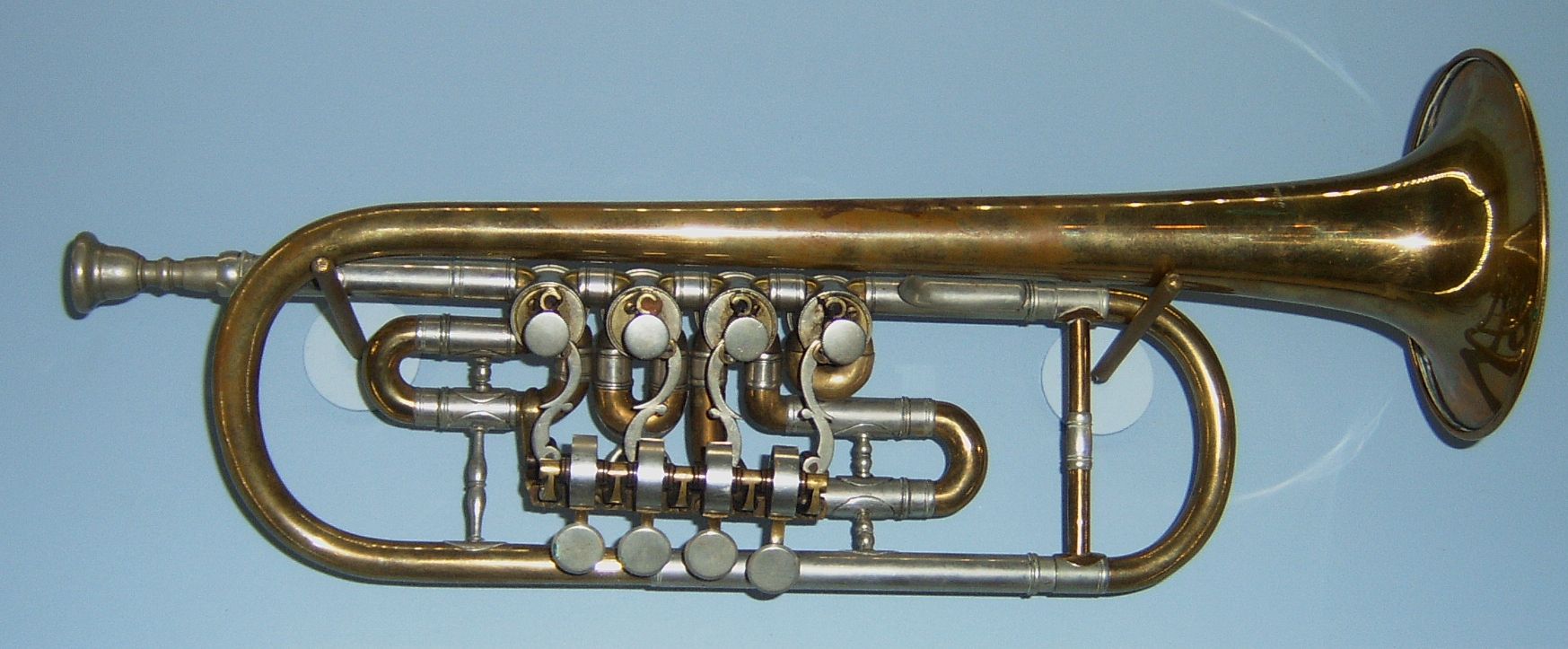
The trumpet was still an incredibly hard instrument to play, and very limited in the number of notes it could play. Around 1800, Austrian trumpeter Anton Weidinger created a design that used holes and keys similar to a woodwind instrument that allowed trumpets to play every note. This model had up to 15 keys on it, and while it became popular with Austrian and Italian military bands, the valved trumpet created in the 1820s soon overtook it in popularity. The trumpet builder C.F. Sattler added the valved technology that was being used on valved horns to the trumpet. This replaced the keys on the trumpet and instead redirected air into different sections of tubing. This revolutionised the instrument, and the modern day trumpet was born.
Uses in Music
In its earliest form, the trumpet was not considered a musical instrument, but rather was used as a means of communication. Because of its high clear tones that could be heard for miles, the trumpet helped signal different manoeuvres (a large-scale military exercise) or activities to armies. This is first seen in the book of Numbers from the Bible. Numbers 10:2 says to “make two trumpets of hammered silver, and use them for calling the community together and for having the camps set out.” Numbers 10:9-10 also tells people to play the trumpet when starting battles, at times of celebration, and at their festivals:
When you go into battle in your own land against an enemy who is oppressing you, sound a blast on the trumpets. Then you will be remembered by the Lord your God and rescued from your enemies. Also at your times of rejoicing—your appointed festivals and New Moon feasts—you are to sound the trumpets over your burnt offerings and fellowship offerings, and they will be a memorial for you before your God. I am the Lord your God. ~Numbers 10:9-10
During the Medieval ages, owning a trumpet was restricted to the aristocracy, becoming an instrument of the cavalry (a branch of the army formed by the nobility). The trumpet was used to sound military signals and helped with maintaining morale. The trumpet became so prestigious during this time that trumpet players began to be connected to the European courts. In 1380, Charles VI was preceded by over 30 trumpeters.
The trumpet continued to be a means of communication for armies, and a repertoire of calls were developed. This was first published in the 1790s by the British Army. Examples of these calls included the Reveille that signalled the start of the day, the First Post to signal the end of the day and when the duty officer would begin his inspection of camp, and the Last Post to signal that the camp was closed for the night. During World War I, the Last Post started being played to mark the fallen during battle and has now become a sound of remembrance. It is often played on or near Remembrance Day to commemorate the fallen soldiers.
After the addition of valves, the trumpet became a much easier instrument to play, and composers quickly found uses for it in classical ensembles, orchestras, and even in popular culture. The trumpet also found its place in Jazz music in the 1920s and became one of the first instruments to be recorded. There have been many famous Jazz trumpeters, including Louis Armstrong, Dizzy Gillespie, Miles Davis, and Wynton Marsalis. The trumpet is still being used today in songs like “Safe and Sound,” “Uptown Funk,” “YMCA,” and “This Girl.”
Listening Examples
The First Post by Unknown (published by the British Army)
The Last Post by Unknown (published by the British Army)