
Unit 4: Learning Activity 2

Emotional intelligence is “. . . the ability to perceive and express emotions, to use emotions to facilitate thinking, to understand reason with emotions and to effectively manage emotions within oneself in relationship with others” (Northouse, 2019, pg. 28). “Self-awareness” refers to the personal insights of the leader (Northouse, 2019, pg. 202). In a chapter on authentic leadership, Northouse states that one of the four components of authentic leadership is self-awareness (Northouse, 2019, pg. 202). In the context of the study of servant leadership, self-awareness differs from emotional intelligence in that awareness in a servant leader means that they are aware of a multitude of needs of their followers, from teaching, direction, affirmation, challenge and encouragement. In order to be aware of the needs of their followers, any servant leader needs to be a good listener, approachable, open-minded, kind and gracious.

A person who best exemplifies the servant leadership component of awareness is a former pastor of a large church. The pastor has great intuitive sense when someone was troubled or anxious. He was a remarkably good listener and always asked insightful and helpful questions. Working with him in a board context, I noticed his awareness of the motions of others, and this characteristic is one from which I continually learn. This pastor, because of his great awareness, was one of the most influential people on my leadership development.

The video on Southwest Airlines was fascinating (KnowledgeAtWharton, 2008). What was particularly notable was the servant leadership style of the management team. Each employee is respected equally, recognized for their contribution and challenged to their strengths. In the airline industry, there are very few variables given that all the companies buy the same planes, fuel and use the same airports. Most airlines too often lose money, but Southwest Airlines stands out as the exception. Competitors could attempt to copy its model of servant leadership, but they do not. Why these other airlines do not copy Southwest Airlines is a paradox. In contrast, in other industries, such as the graphic arts, there are many variables. Some companies in this industry are successful because of the leader’s genius for technology, skill in refining processes to increase productivity or are very sales driven. None of them model servant leadership but are successful.

It is interesting that servant leadership might be more of a requirement for ‘success’ in certain industries. Given this example, is servant leadership a requirement for success in your industry or area of leadership experience?

KnowledgeAtWarton. (2008, July 9). Southwest Airlines’ Colleen Barrett on ‘Servant Leadership’. [Video file]. Retrieved from http://www.youtube.com/watch?v=6TgR95vnM0c

Northouse, P. G. (2019). Leadership: Theory and practice. Thousand Oaks, CA: Sage Publications.


Learning Activity 1

Transformation leadership (Northouse, 2019, pg. 161) is one of the eight leadership trends that Northouse identifies from the last 120 years (Northouse, 2019, pgs. 2-5). Is transformational leadership simply another trend or popular research topic? Transformational leadership will stand the test of time because it has one strong distinctive. Unlike other styles of leadership, the biggest and most important differentiation of transformational leadership is the great desire “to empower their followers and nurture them in change” (Northouse, 2019, pg. 175). The most important component of a transformational leader’s approach is their emphasis on individuals. Northouse also compares transformational, transactional and laissez-faire leadership styles. While the latter two styles impact followers in various areas, only transformational leadership impacts areas of personal growth. Transformational leadership will prove to be a more effective and lasting leadership trend because of its emphasis on the growth of followers.

My idea of a transformational leader of the past would be Dr. Henry Hildebrand, the founder and 45-year president of Briarcrest College in Saskatchewan. In my interactions with him over a span of four decades, he demonstrated interest in my well-being and growth. He was always vision-directed and pragmatic and was continually refining the management processes of the school. Additionally, he was remarkably open to new ideas, processes and options. In many senses, he was my spiritual mentor. Among the many things I learned from this man and, in my opinion, transformational leader, the most important was that when making a decision, analyze objectively the cost of failure.

Northouse, P. G. (2019). Leadership: Theory and practice. Thousand Oaks, CA: Sage Publications.

Light From Many Lamps – James Gordon Gilkey

The essay I selected from Light From Many Lamps is a piece on James Gordon Gilkey a teacher, pastor and chaplain (1988). He discusses bereavement and the necessity of facing and accepting that a loss is the first stem to manage treatment. My take away lesson on leadership from this essay resonated in the bigger context above and beyond bereavement. The fact that many leaders will inevitably face failure, disappointment and, likely, grief. Too many times, leaders faced with these realities engage in denial and have difficulty accepting it in short and have a very difficult time getting past the issue. My own situation, with the sudden death of our son, has taught me to a greater extent the necessity of accepting reality and not lingering in denial. One of my favourite sayings is: “10 per cent of life is what happens and the other 90 per cent is what you do with it.” As a leader, more important than what has happened is the question of what you do with the situation.

Watson, L. (1988). Light From Many Lamps. New York, NY: Simon and Schuster.

Response to dawnES – Rank, Think, Write

Response to Norm Benge – Rank, Think, Write

Wow! Thank you for your great critique of my post. You asked: “… what mechanism [would the] employer use to teach and  mentor employees to think for themselves while also upholding business standards?” For instance, my business is in manufacturing so we are always developing new products and modifying our machinery. On a regular basis, I task a large group of employees, from leadership to machine operators to figure out a way to improve a process, while maintaining our high standard of quality and service. I have learned to point out to new additions to the “thinking team” that each person should identify past attempts, failures, order of operations, etc. Then, we all meet and evaluate and rank the ideas based on cost, projected improvement, etc. We try several ideas, and often the best ideas are not from management!

You mentioned that in your education environment, it takes some time for some (or all?) or them to work out and fully understand their goal and settle on a process for completion. I think many people require structure and direction. Others, however, thrive on contributing their critical thinking in their workplace. You’ve given me something to think about it terms of whether it is desirable, possible or even feasible to shift the process of critical thinking to every employee. It might result in lower productivity for some and even prevent them from being their true selves. Thank you for giving me something to think about!


Response to B.’s Learning Activity 2

Learning Activity 2 – Rank, Talk, Write

What I particularly liked about your summary is Cooper’s contention that creative criticality helps “produce lifelong learners who are capable of creating new ideas that have been evaluated through critical thinking.” I like this idea because the process of creative criticality is important in and of itself, but the fact that it could be lifelong, infinitely multiplies its effectiveness. I find it encouraging that not only does creative criticality give the learner the ability to both create new solutions but it helps them critically analyze solutions before implementation. Implementation, to me, is the key because largely speaking, solutions that are not implemented I don’t think are as valuable.

Response to Daniel’s Rank, Talk, Write

Unit 3 – Rank, Talk, Write

In response to your question, “Is this all learned or can some of these traits come naturally as a church leader?”, I believe all Christians have been given one or more permanent spiritual gifts. The pastor with the spiritual gift of administration/leadership may have a different career trajectory than a pastor with the spiritual gift of helps or mercy.

Your analysis of this article was interesting, and I agree that practice makes you more effective in your vocation. In addition, the point about “incremental fluctuations” I have found to be true in my own life. For example, I’ve come to realize that many people have been changed in good or bad ways because of life experiences.


Unit 3 – Rank, Talk, Write

As a business owner, I am always looking for ways to improve my workplace. Gino and Staats’ article, Developing Employees Who Think for Themselves is particularly relevant to my leadership area (2015). The article focuses on three things employers can do to help their employees use critical thinking in their position: Process, Identity and Time.

1. Process

To help employees use critical thinking, Gino & Staats say there needs to be a “shift in ownership of the process from the manager to the worker” (2015). They further state that many “managers punish their subordinates for failing to follow instructions” but then “complain that employees don’t think for themselves” (2015). To achieve a change in process, managers need to focus on the outcome not the process.

2. Identity

Identity is enabling employees to “… bring their true and best selves to work” (Gino & Staats, 2015). Gino and Staats argue that, “People … lose their sense of identity at work [because they] learn how to behave in clearly defined ways” (2015). By giving employees “the ability to reshape [their] actual work,” they are able to use critical thinking in their position (Gino & Staats, 2015).

3. Time

The aspect of time is “allow[ing] individuals to consider how best to complete the work that needs to be done within the constraints of the company and their own lives” (Gino & Staats, 2015). By giving employees time flexibility, a manager gives them the opportunity to think about their tasks a different times.

The focus of this article is the transferral of critical thinking from managers to employees. The authors argue that for the past hundred years, management’s main role was to identify the best processes and then have workers follow the processes precisely (Gino & Staats, 2015). In today’s world, though, the only way for companies to thrive is to get employees to think and not just follow procedure. The authors then state that many organizations merely stress building critical thinking and developing “process-improvement skills” rather than redesigning the actual jobs of their employees (Gino & Staats, 2015). Essentially, jobs need to be redesigned so they give employees ownership over how they perform their job, how they act within their job and how they manage their time while completing their tasks.

Gino, F. & Staats, B. (2015, June). Developing Employees Who Think for Themselves. Harvard Business Review. Retrieved from https://hbr.org/2015/06/developing-employees-who-think-for-themselves

Learning Activity 3

The Skills Inventory indicated I was the weakest on the conceptual and had stronger and equal technical and human skills. Before taking this survey, I felt I was very good at concrete ideas, not abstract ideas so this was not surprising. I was stronger and more balanced between technical and human skills.

On the Style Questionnaire, my relationship score was moderately high. I have many employees who have worked with me for decades, and I believe one of the reasons for their loyalty is I have a balance between rigid performance standards coupled with an informal management style.

I thought my Task Score, which was moderately low, would have been higher because much of my daily routine consists of developing, planning numerous technical designs and processes.

On the Leadership Questionnaire, I was pleased to see that other people’s perception and my self-perception were the exact number. I felt comfortable and encouraged by this. In his book, The Art of Management (1998), Max De Pree says that one of the requirements of leadership is the ability to identify reality. I feel that the correlation between my self-perception and others’ perception of me indicates that, at least in that area, I have a good grasp of reality. Other people’s perception of me reflects my true self.

De Pree, M. (1989). Leadership Is an Art. New York City, NY: Doubleday Business.

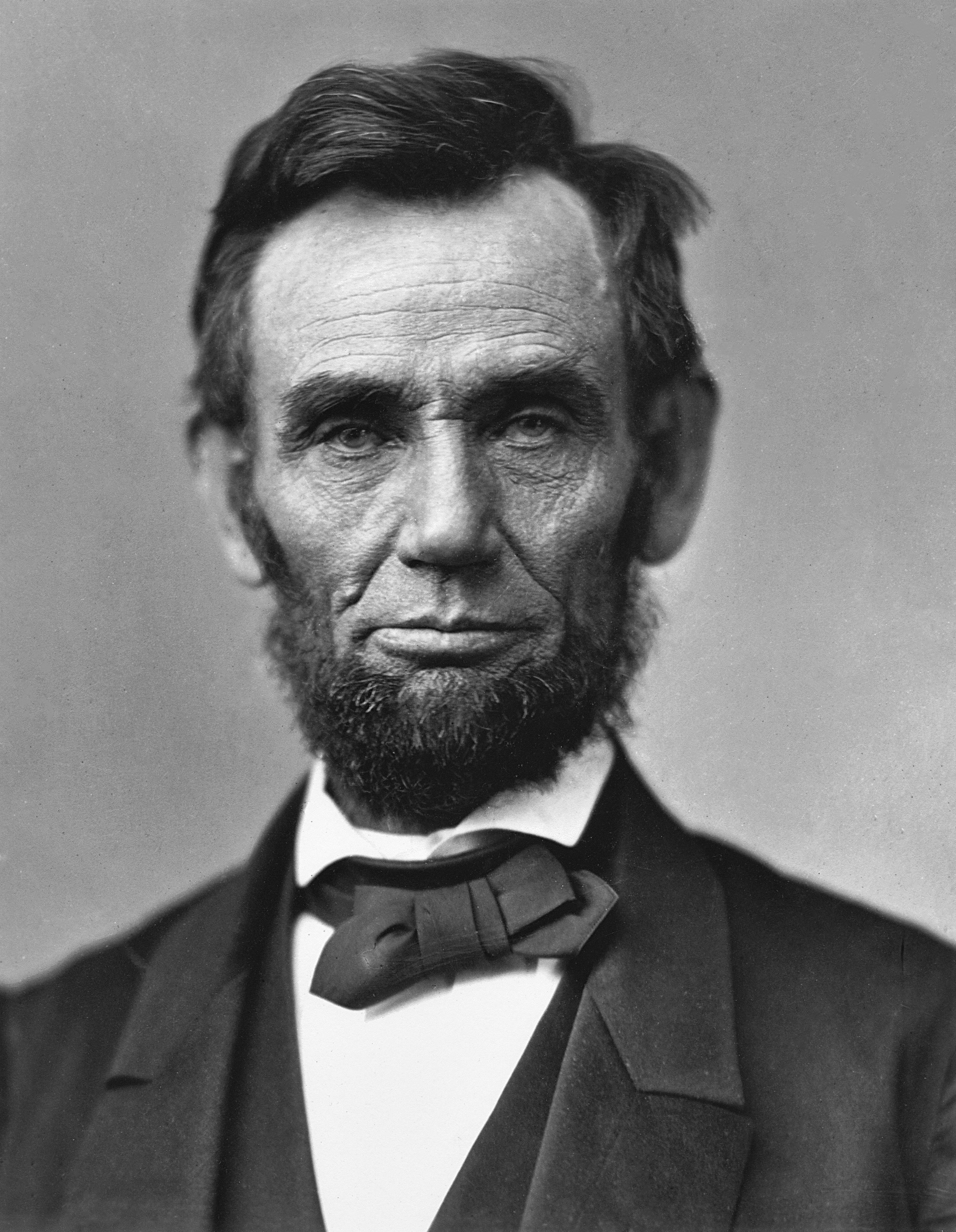
Light From Many Lamps – Abraham Lincoln

Abraham Lincoln: Without Divine Assistance, I Cannot Success; With It I Cannot fail

The story begins with the departure of Abraham Lincoln at the railway station from his home of 25 years on his way to Washington, D.C. to be President. While hundreds of people came to send him off, neither his wife or children were there because of his wife’s illness. In his farewell address, he spoke with “sadness, and in great humility” even though he was “tired and distraught” (Watson, 1998, p. 69). In his short speech, he gave credit where it was due and thanked the people there and said he owed them everything (Watson, 1998, pg. 69).

While there are a few leadership lessons in this story, such as humility, giving credit, showing gratitude, etc. I choose to focus on transparency and vulnerability. Lincoln shows transparency and vulnerability by expressing his sadness, and as the author notes “great humility” (Watson, 1998, p. 69). In spite of the fact that he “looked tired and worn … his voice was warm with affection”(Watson, 1998, pg. 69).

The lesson on transparency/ and vulnerability shows how important it is for me as a leader to be deliberately more expressive of my emotions, failures, heartaches, etc. whether it be as a leader of a small group or as a business owner. While many people hide their weaknesses, the emotional circumstances of his departure did not affect Lincoln’s candor. In spite of him showing what many people would call ‘weakness,’ Lincoln was one of the world’s greatest leaders.

Watson, L. (1988). Light From Many Lamps. New York, NY: Simon and Schuster.

Response to Ccbeau

Blog Post 1

I wholeheartedly agree with Christina’s opinion and experience that there is a huge difference between leaders and managers. I’ve read frequently that leaders know where to go and managers know how to get there. Also, that leaders know what needs to be done and managers know how to do it.

As for Christina’s question, “Have you personally experienced the stark differences between a leader and a manager?” I have 3 great examples in my personal experience of how managers failed as leaders. Each example is a pastor in a large church. The first case, the pastor was a famous preacher, author, speaker, etc. but under his “leadership” the church declined and almost closed because he wasn’t acting as a leader. The second example involved a pastor who was great at interpersonal relationships, an excellent counsellor and a better-than-average preacher. In one month, though, four key leaders all resigned because he was not acting as a leader. The third example, the “leader” who, in essence was a manager, saw an aggressively growing church plateau because he wasn’t acting as a good leader. I think these examples demonstrate what Christina pointed is that there is a major difference between leaders and managers.