Bird of the week – the duck-billed platypus

This week’s bird of the week is just ducky. I mean it has a beak like a duck and lays eggs like a duck, and even swims somewhat like a duck what more do you want?

Indiana poet James Whitcomb riley (1849-1916) is likely responsible for the well-known truism: “When I see a bird that walks like a duck and swims like a duck and quacks like a duck, I call that bird a duck.” From this statement, the main issue for platypus identification is that it definitely doesn’t quack like a duck. Rather when it rarely speaks, the platypus makes an odd sort of growl that could not be mistaken for a quack.
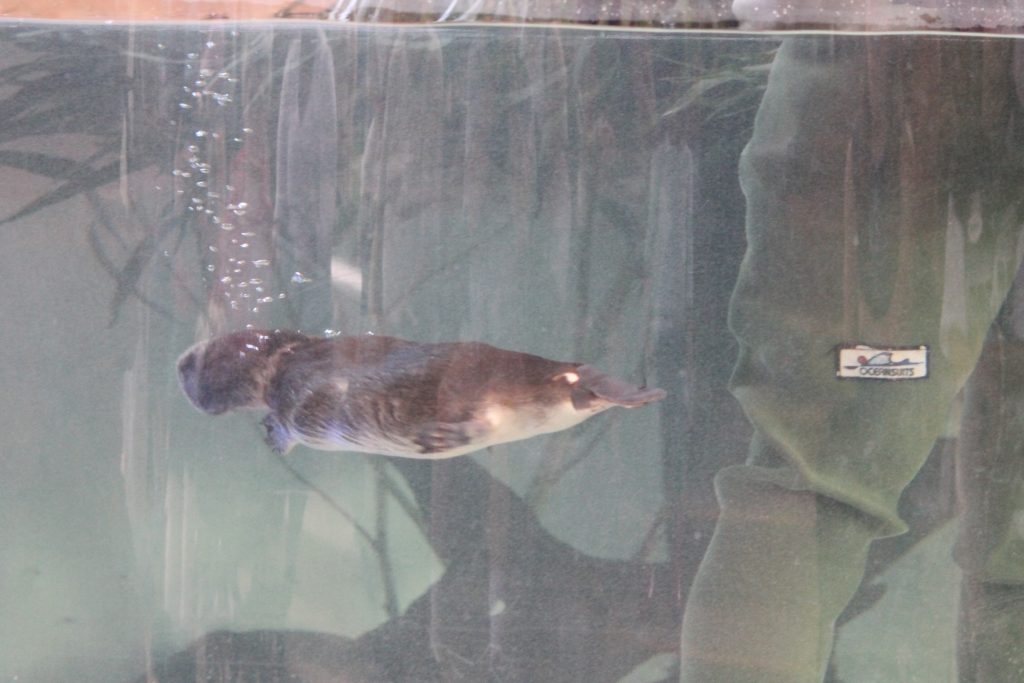
 

Interestingly though, when the platypus was first unveiled to science, scientists thought it was an elaborate hoax, so improbable the combination of features appeared. When Dr. George Shaw received the first specimen to reach Britain in 1799, he started cutting it up, expecting to find stitches connecting the duck bill to the head. Shaw went on to name the species Platypus anatinus meaning “flat-footed” and “duck-like.”
 

However, it turned out the Genus Platypus was taken (a group of beetles had snagged it), so the name had to be changed to Ornithorhynchus anatinus which means “bird-like snout” and “duck-like.” Pretty ducky beast apparently! I got to see a very ducky performance by a platypus named Millsom at the Healseville Sanctuary near Melbourne last week – see excerpts below.


Platypus keeper Jessica Thomas called this quite possibly the worst platypus show ever because the platypus was not cooperating too much. He refused to fight with the fake light blue platypus and refused his favourite treats. Then when she went to activate the remote to release soap bubbles from the back of the amphitheater, for some reason that didn’t work at first either. Nevertheless, I found it a thoroughly enjoyable and educational show, and at least Millsom was in fine swimming form.

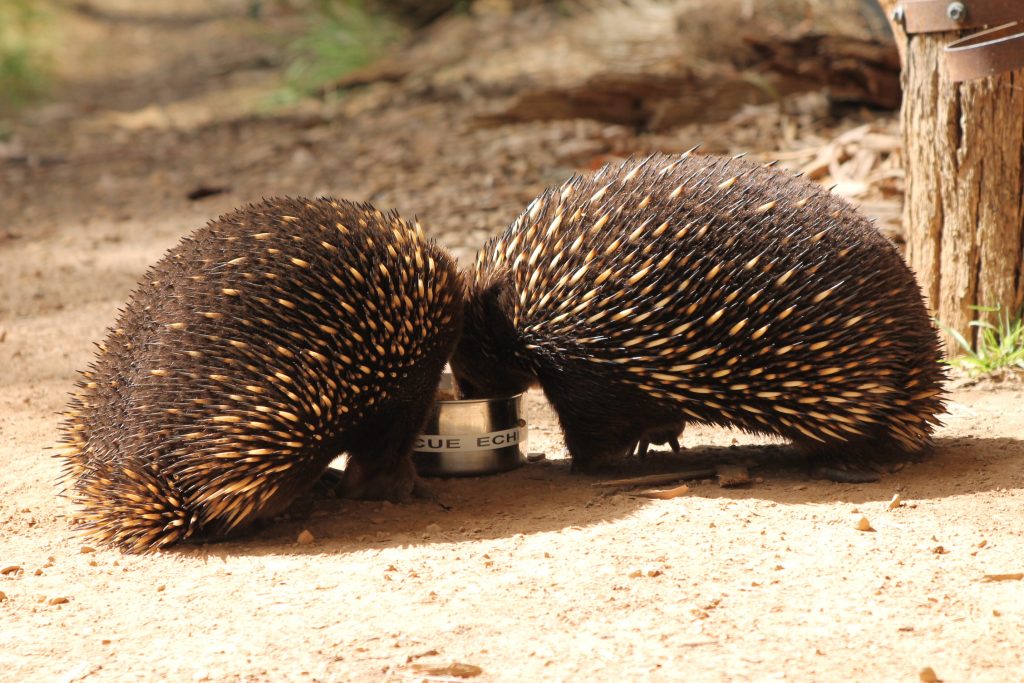
As keeper Thomas explained, the platypus is one of only two types of mammals in the egg-laying Monotreme, the other being the echidna. I got to see echidnas at the sanctuary too – as shown below. Platypi and echidnas are not birds, to be sure, but very spectacular and unique mammals!
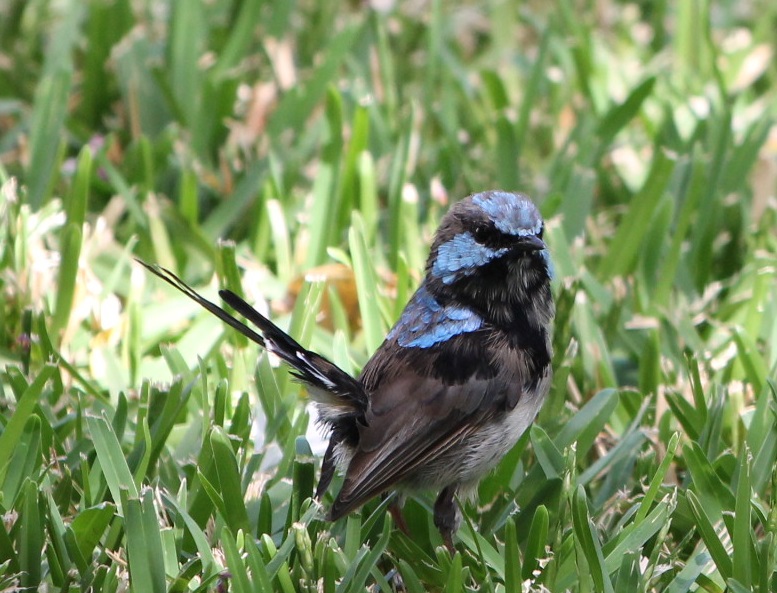
Bird of the week – Splendid fairy-wren

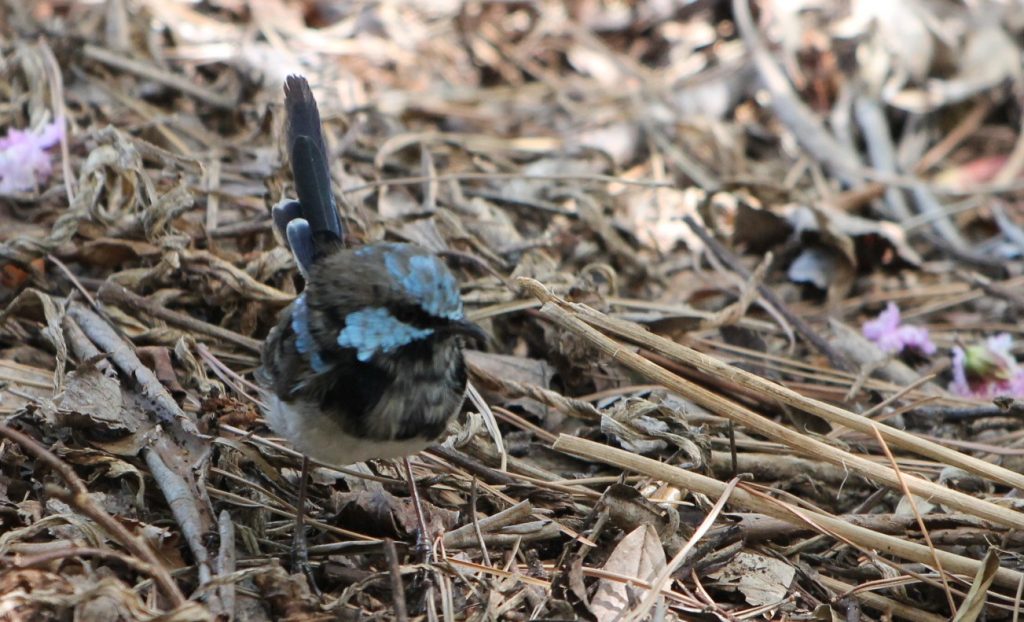
This bird is superbly named. Any doubts about how it is named might be dispelled by a sighting of the brilliantly blue hues glowing from the males of the species. Australians voting for the top bird also thought it was the most superb – when Birdlife Australia conducted a poll in 2013 to determine the most popular bird in the country, this little bird was #1.

Regarding the superb result for the fairy-wren Birdlife Australia asked: “Is it the stunning males in breeding plumage? Or the fact that they live in many people’s gardens, particularly where there is a lot of dense cover for them to retreat to and breed in?

However, in 2017, the fairy-wren dropped to #5 with the Australian magpie taking top honours – see my synopsis of the 2017 winner at:

Bird of the week – Australian magpie

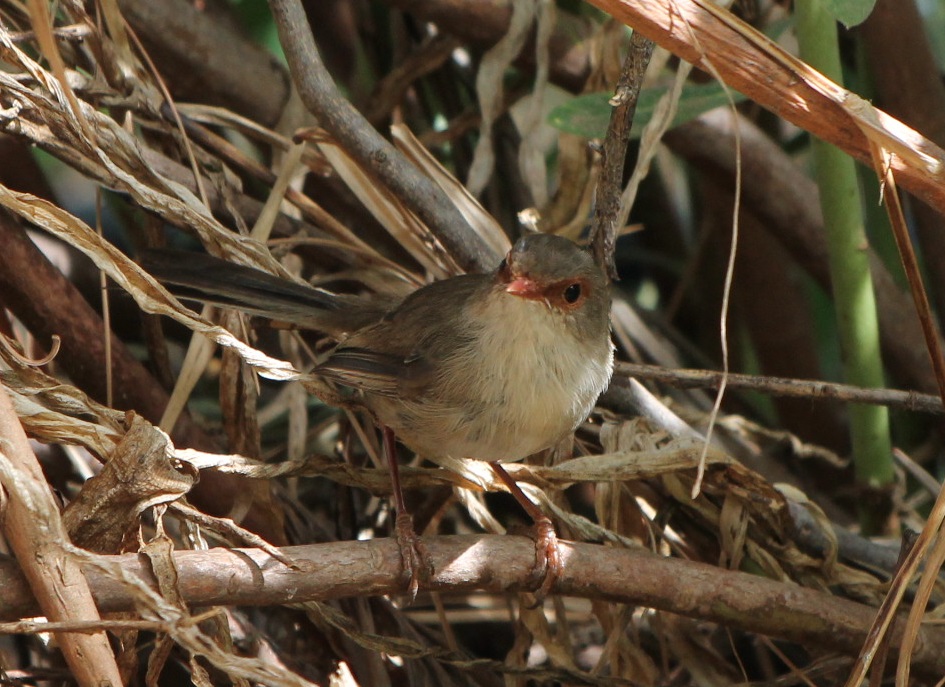
Back to the wren, these dainty birds produce a mesmerizing song characteristic of wrens. They live very gregariously. I was wondering why I saw more of the brown females around than the blue males, but it turns out that in the small groups they hang out in, many of the brown ones are immature males, yet to take on their true colours.

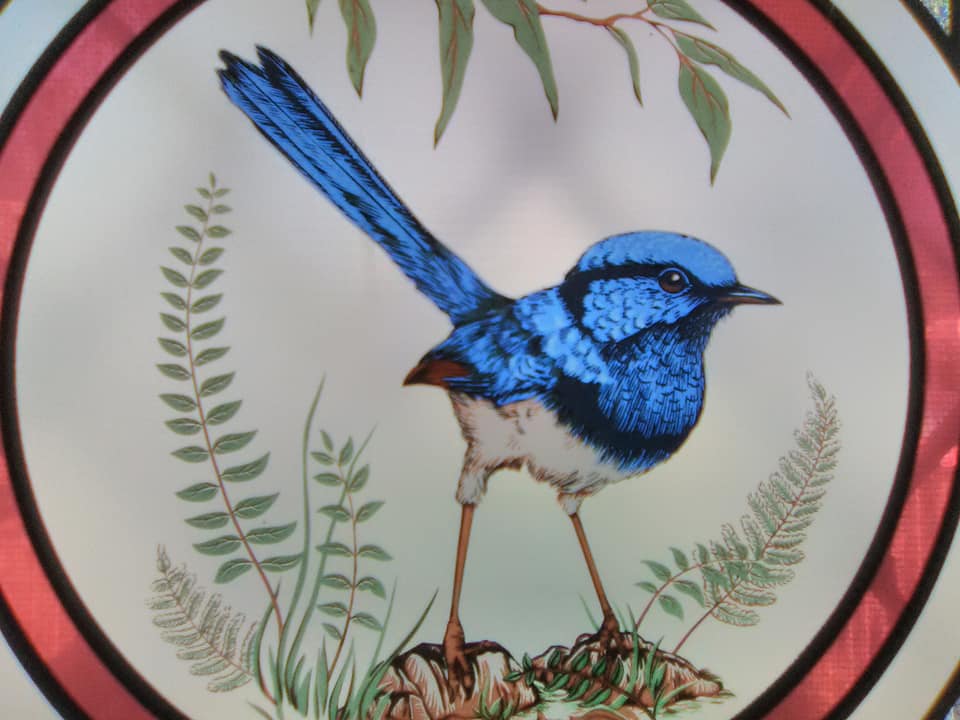
In Australia, as well as seeing these birds everywhere, we have seen superb fairy-wren art, including in the doorway of our residence in Wagga Wagga, as seen below, and every day when we walk out our door!

Bird of the week – Pacific black duck

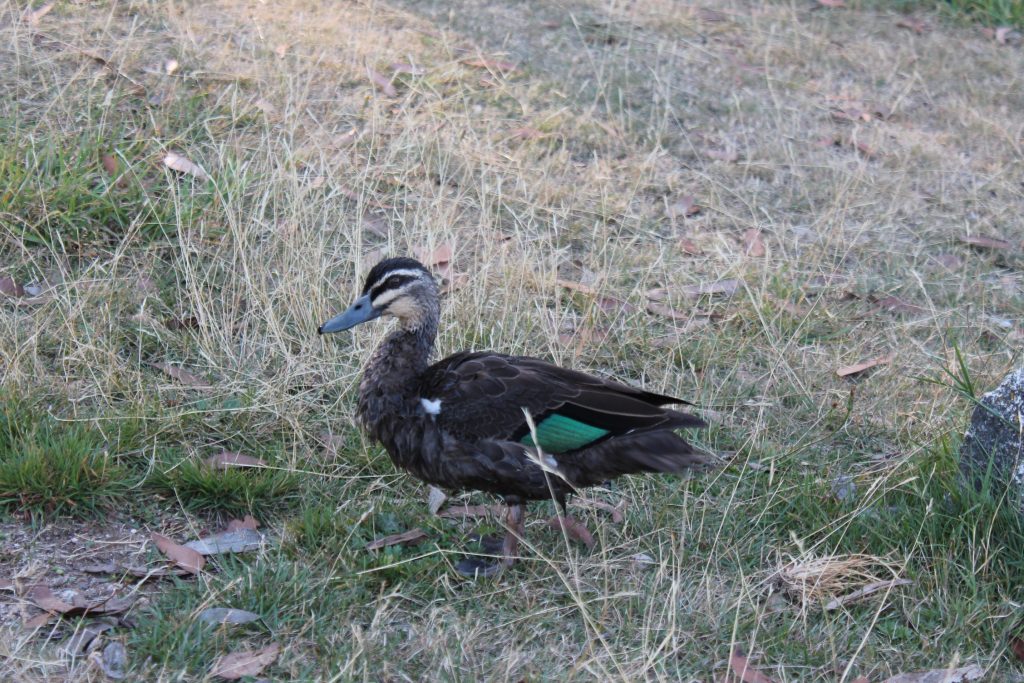
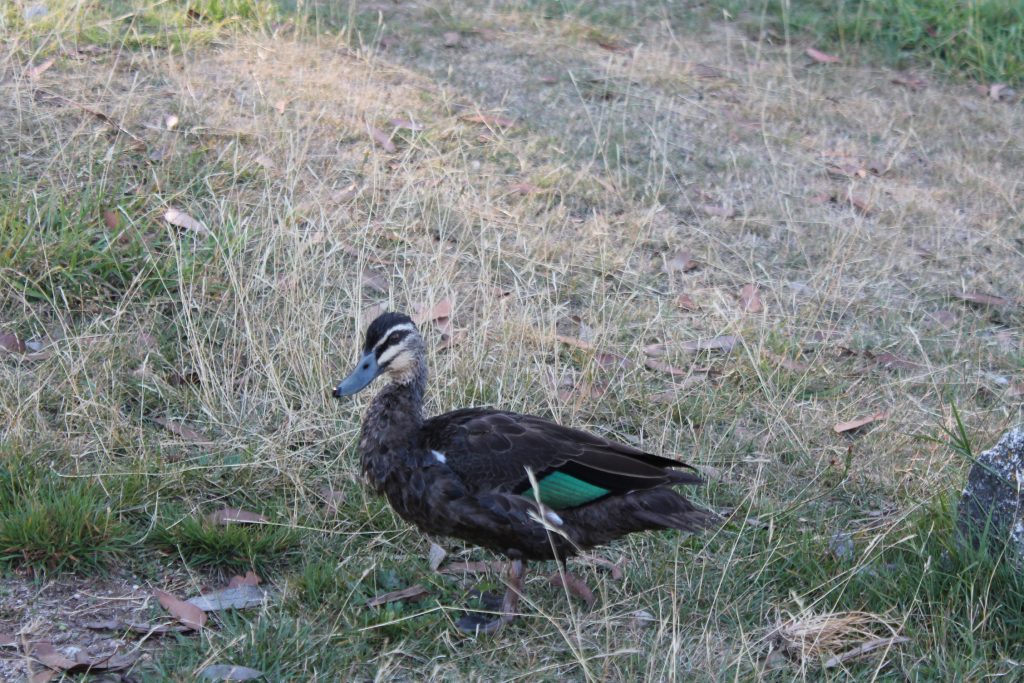
This week’s bird of the week is the Pacific Black Duck. We have seen relatively few of these in Australia, but they are not uncommon. However, the reason this duck bobbed to the surface is a singular, meaningful encounter my wife Deb and I had this past weekend at Mount Buffalo National Park.

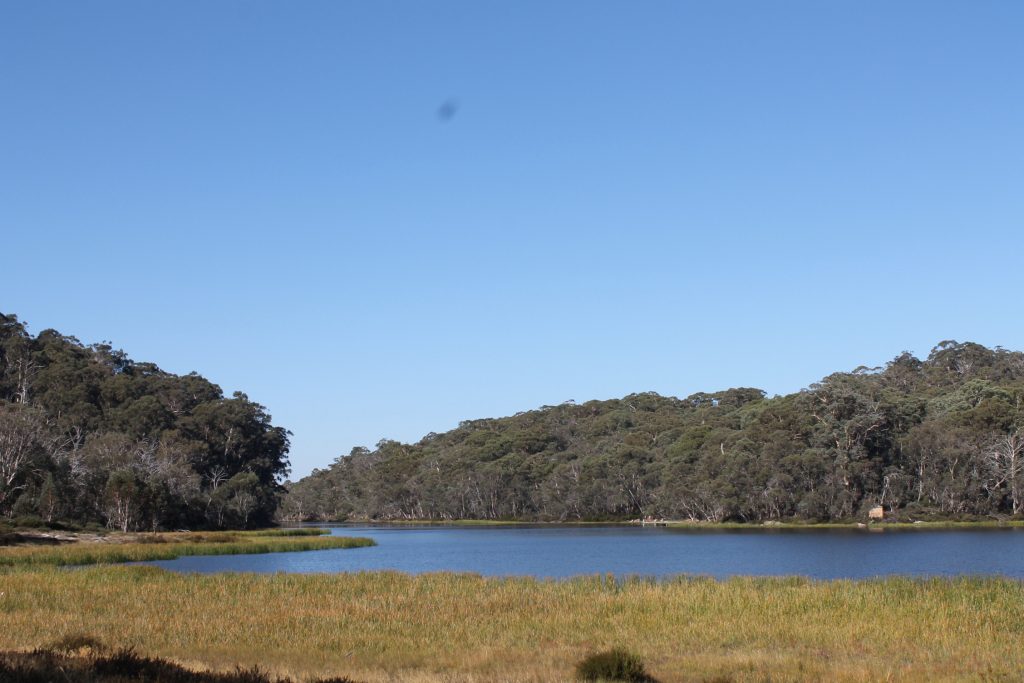
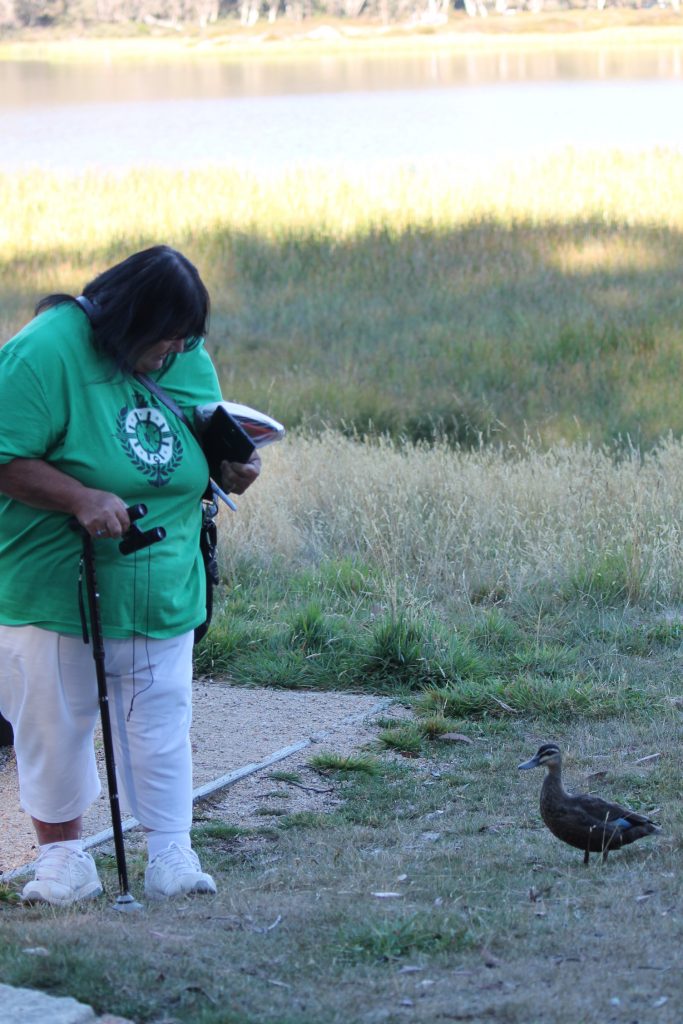
We were preparing our picnic dinner on the shores of Lake Catani at Mount Buffalo. Looking towards the lake, I was arrested by the site of a duck beetling over from the other side of the lake and heading straight for us.

Morgan Free-Duck, the name Deb was to give our duck companion, settled on the ground to join our picnic. Here I need to add the important message, that in general one should avoid feeding wildlife of all types. We usually do ourselves, but for Morgan F. we made an exception.

It was easy to make an exception for Morgan F. because this was an exceptional duck. He or she didn’t beg for food, or honk or anything. Morgan just hung around quietly, happy for whatever scraps came his way.

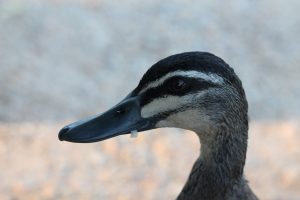
It was a gorgeous night on the lake, and the 3 of us greatly enjoyed each-others company –me, my wife and the duck. As you’ll see, the Pacific Black Duck features a handsome eye-stripe, a beautiful sheen on the secondary feathers, and in fact, a greenish bill. And a pleasant personality – well, I can only speak for Morgan F. He represented the Pacific Black Duck tribe well.

As we packed up, we warned Morgan F. that we were leaving. He wandered toward the lake a bit but then came back up to the picnic table quietly, wandering around as ducks do. It wasn’t until we closed the car doors and looked back, and saw Morgan F. flying across the lake from whence he came, obviously realizing this night’s picnic was over.


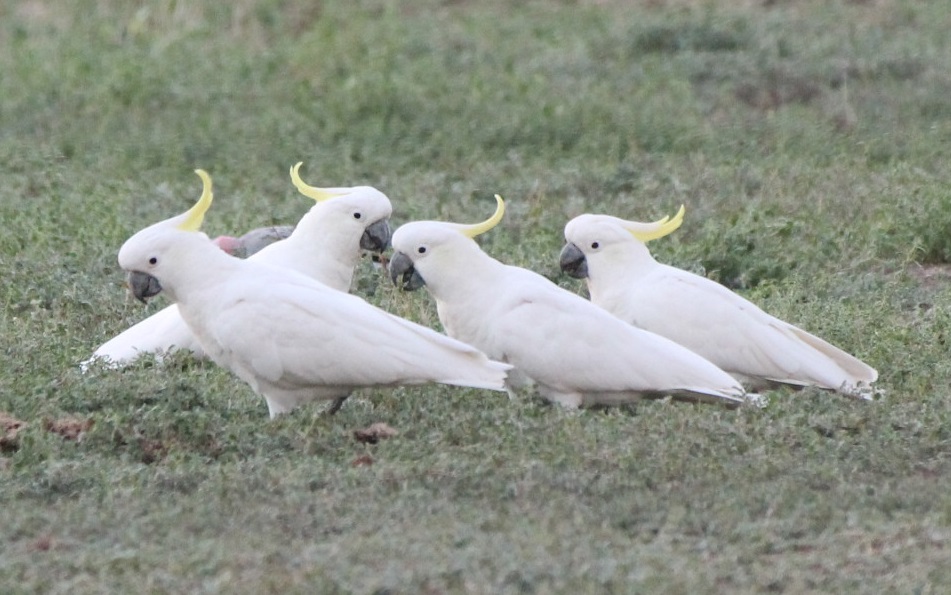
Bird of the week – the sulphur-crested cockatoo

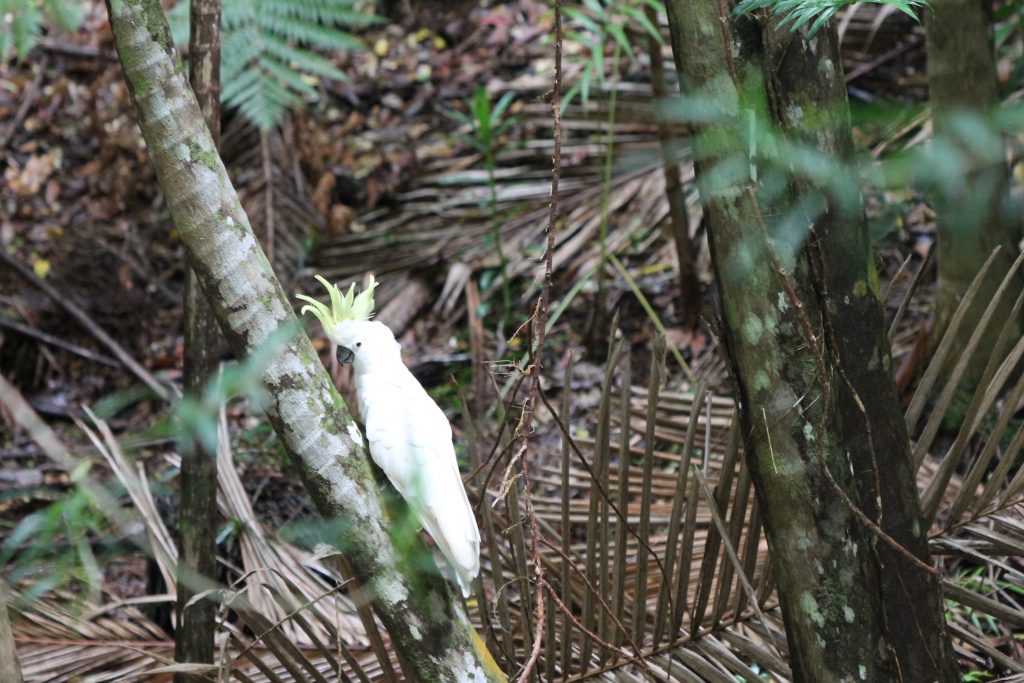
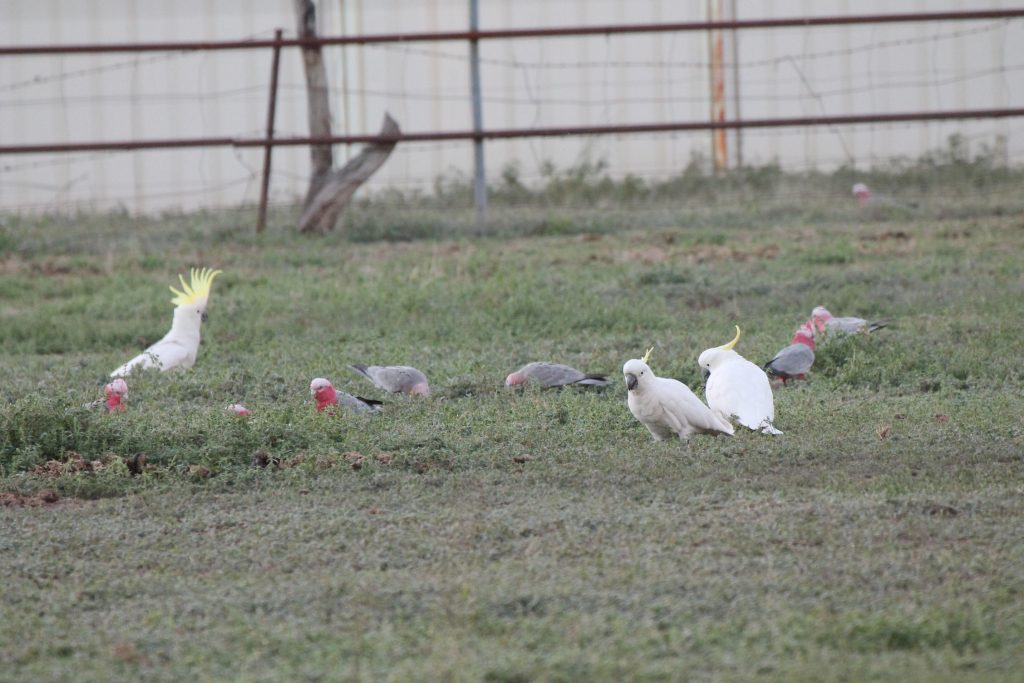
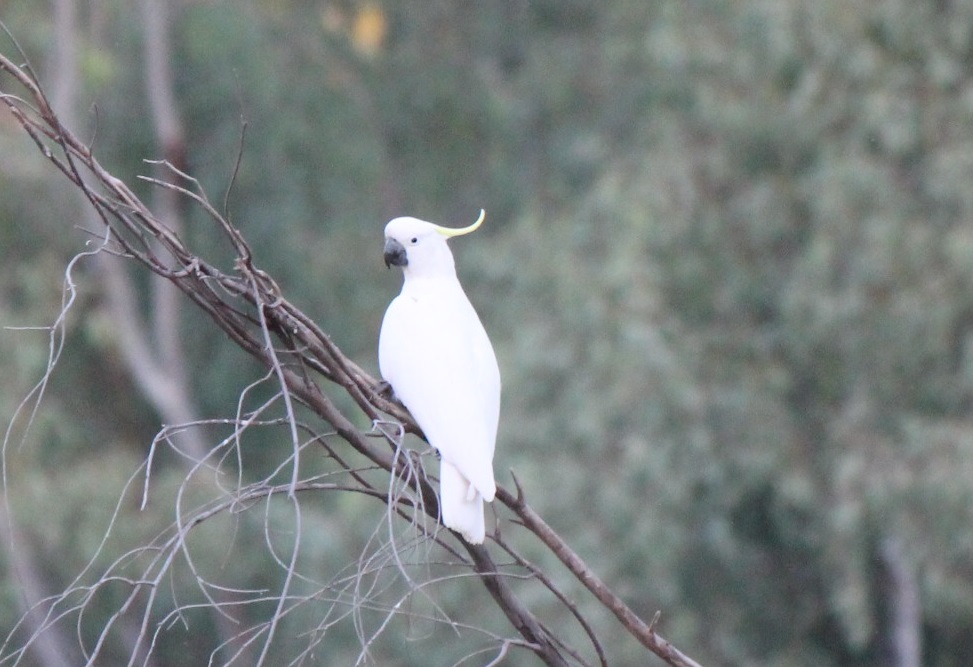
 This week’s bird of the week is the sulphur-crested cockatoo.

My wife Deb still remembers being amazed at seeing flocks of these big white birds when we first were driven home from the airport. Now we see cockatoos we are not so surprised, but still impressed.

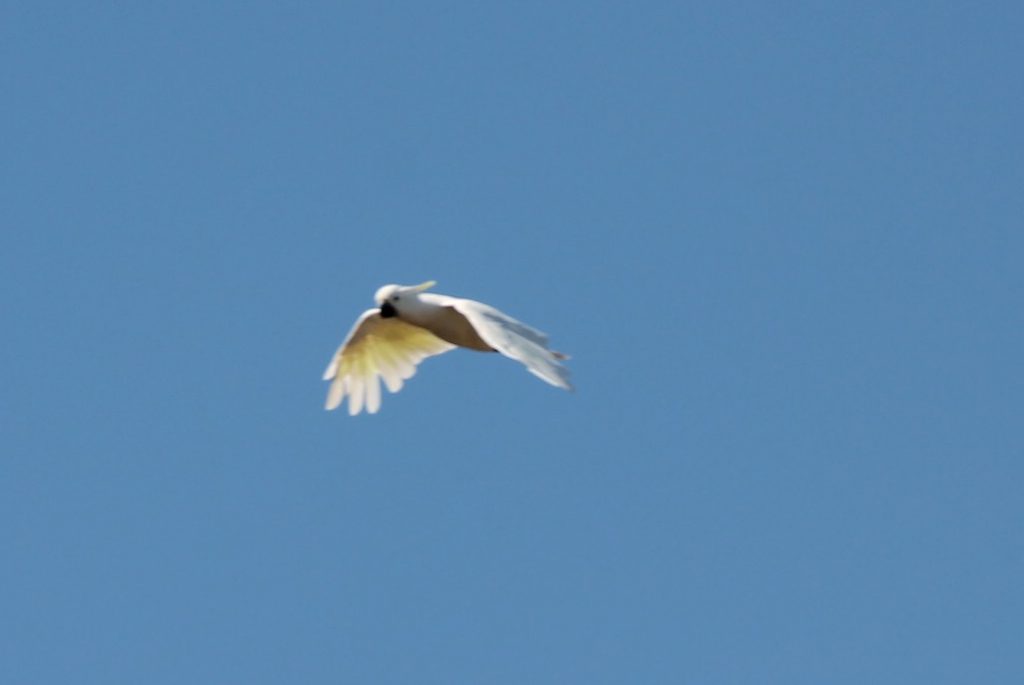
They are definitely a bit like how you would imagine pterosaurs to be. Usually when they fly they announce their presence with a continuous screeching/squawking noise.

So when you get a large group of them together, it’s a raucous. The other night we watched a few 100 of them at our local golf course roosting for the night. Every time one would move about, it would set off some serious squawking…followed by a period of brief quiet, then another would move, setting off more squawking. Hard to get sleep in that neighborhood – whether you’re a bird or some other kind of beast!

When they fly, it is with urgency, like they are thinking they might drop out of the sky if they stop beating their wings frantically. Not great gliders, I guess.

Watching them eat and drink is fun though – as you’ll see in the following video, they enjoy their pine cones, drinking water, and eating sand.


As I said, they are everywhere here and noisy – but still, it is amazing seeing this exotic pet carrying on like the wild bird it is.