Bird of the week – parrots

Well, it’s pretty much my second last week here in Australia, after a more than 4-month stay. Throughout the whole time I have been pursuing parrots. Actually, the first parrots were easy – the Rainbow Lorikeets I was tending at our temporary abode while the owners my hosts, Paul and Leslie Weston were on holiday. The pair of Rainbow Lorikeets and their young child were caged – just as we see parrots in North America.
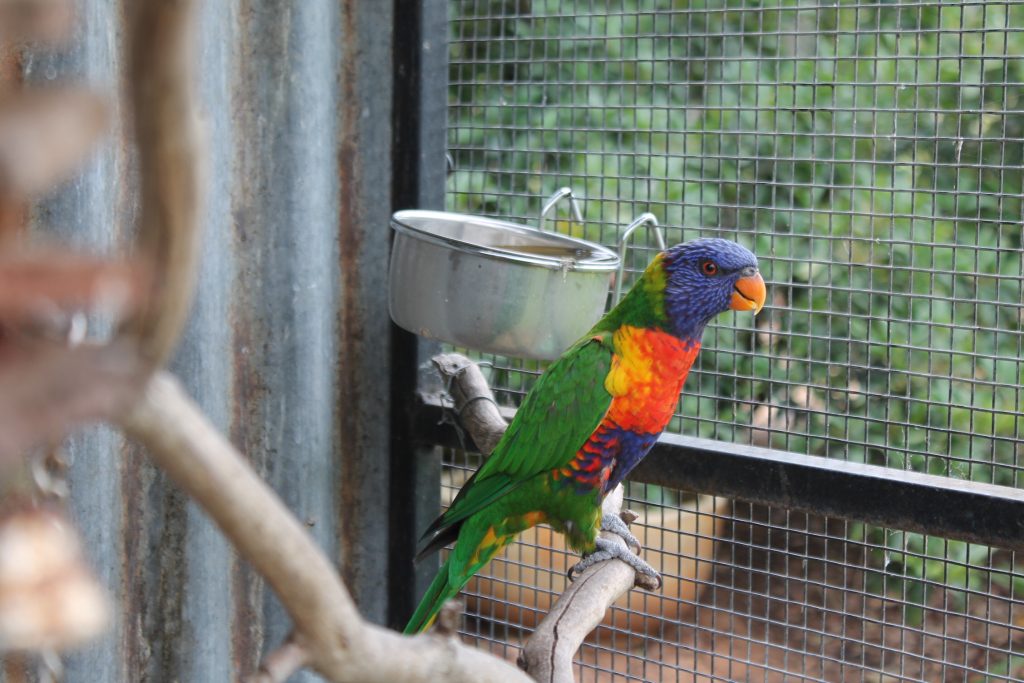
One of the Rainbow Lorikeets I got to look after

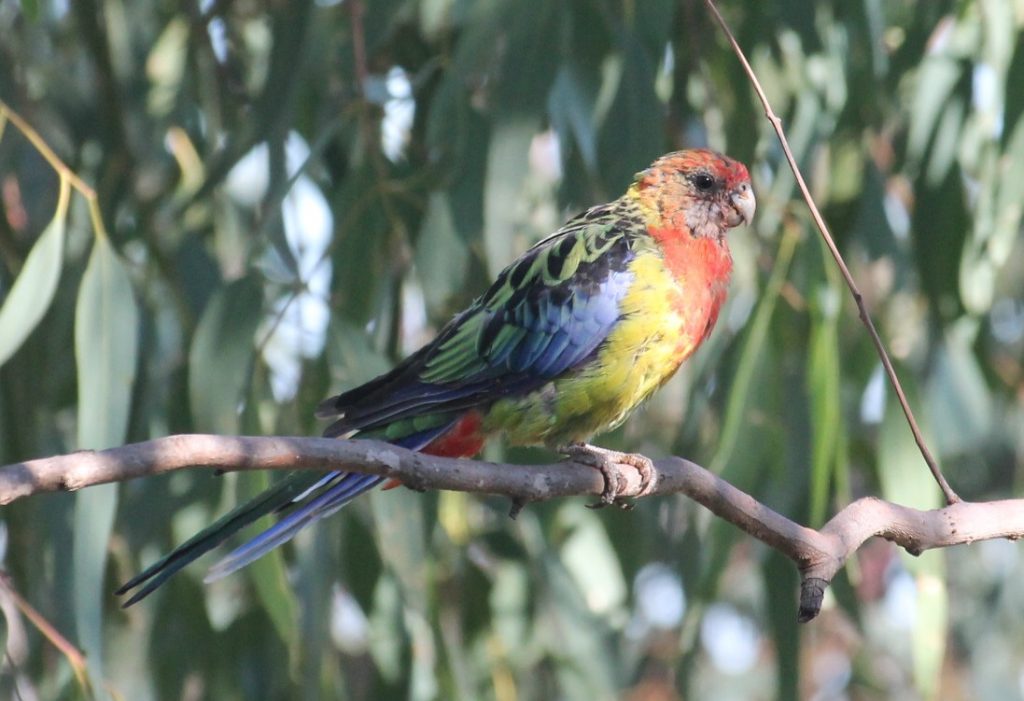
However, just as rainbow lorikeets also range free here, there are many other parrots about. I quickly learned to recognized their quick flight, with their long tails streaming out behind. I would chase after them with my camera, and they would usually settle in a high tree. By the time I caught up to them, they were usually nearly invisible in the tree, or on their way to the next tree. However, over time I gradually lucked out and managed to snap a few photos before they winged away – like these Eastern Rosellas below who distracted me one morning when I should have been getting to my work at Charles Sturt University.
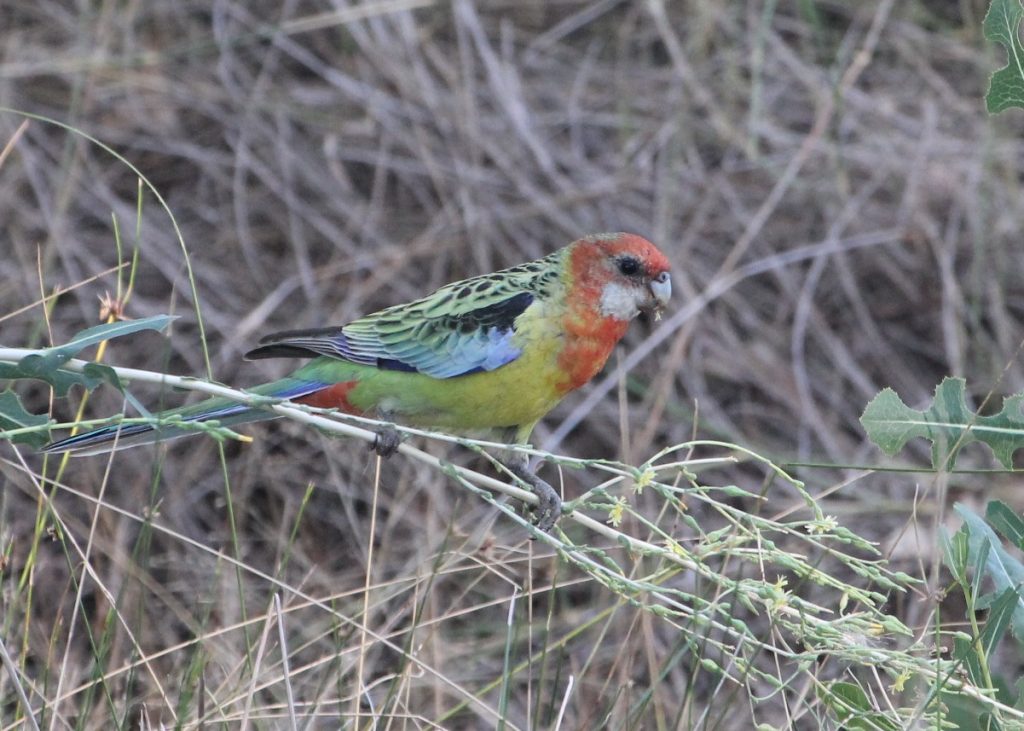
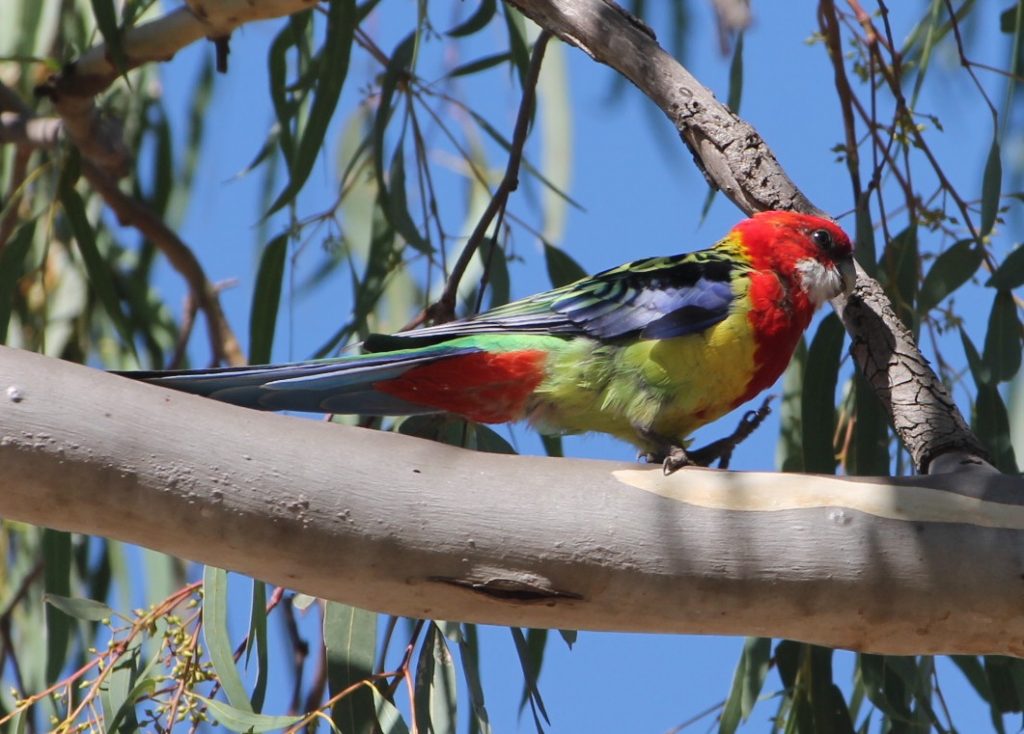
Eastern Rosella
Eastern Rosella
Eastern Rosella

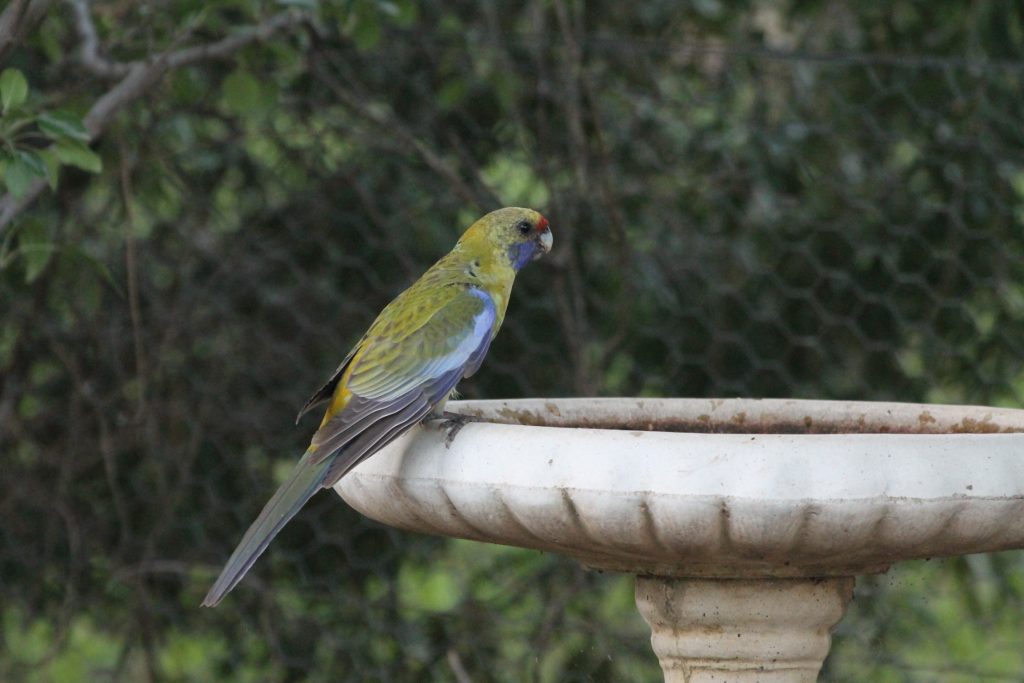
Even in our backyard here in the Lake Albert district of Wagga Wagga, I was able to get some nice photos of the light-colour form of the Crimson Rosella  by the bird bath one evening.
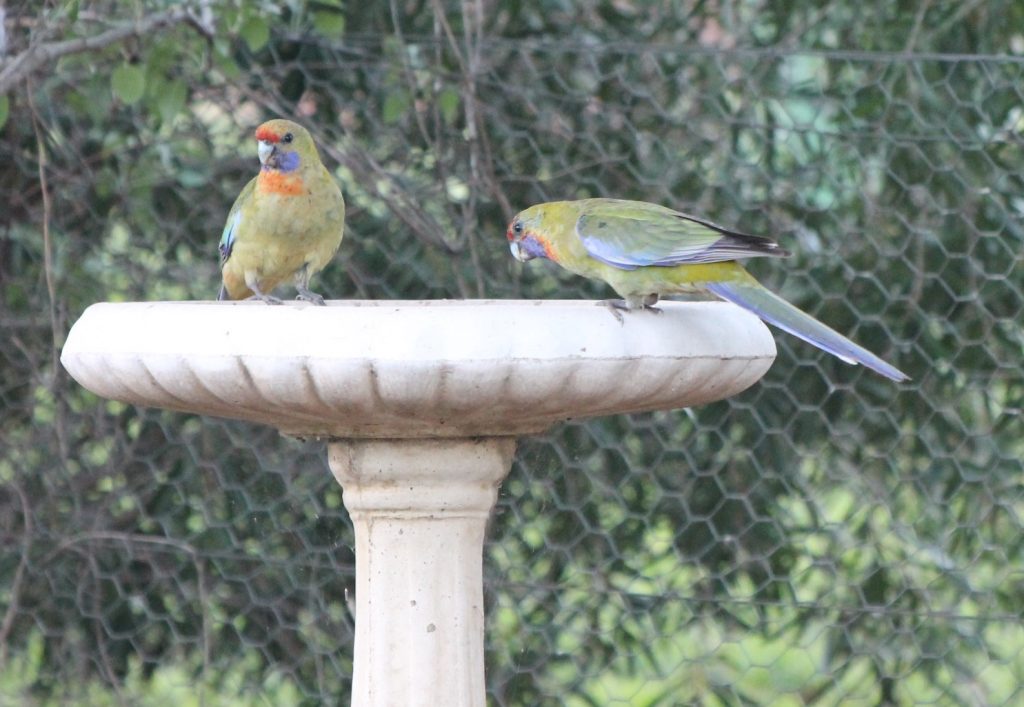
Crimson Rosellas
Crimson Rosella

Around Lake Albert itself, I have been able to see the beautiful little Red-Rumped Parrot  (see below) from time to time, and show them off to my parents visiting from London, Ontario, Canada.
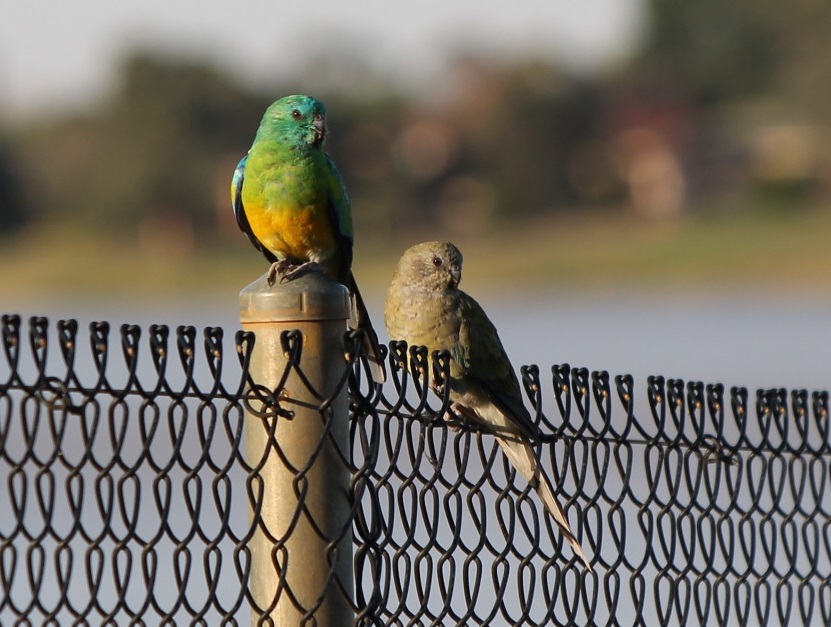
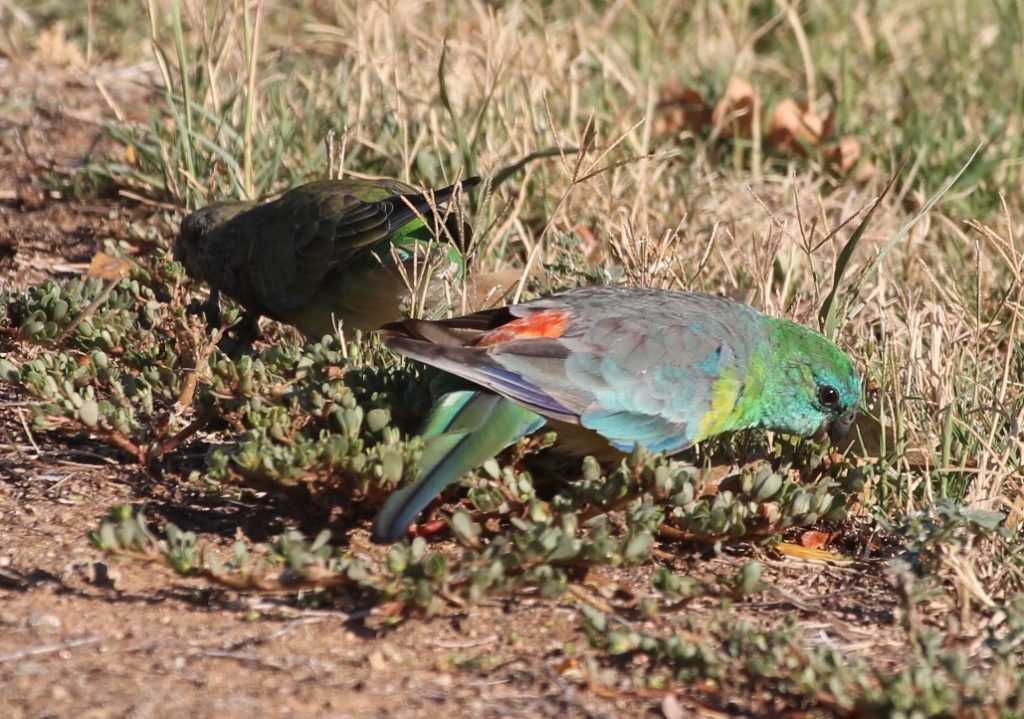
Red-Rumped Parrot
Red-Rumped Parrot

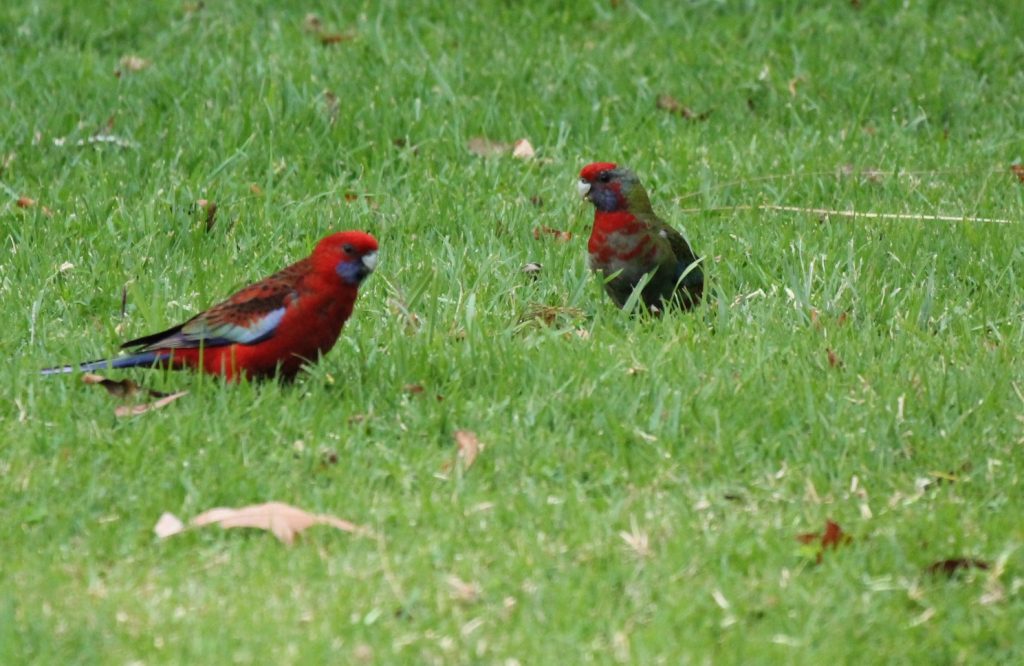
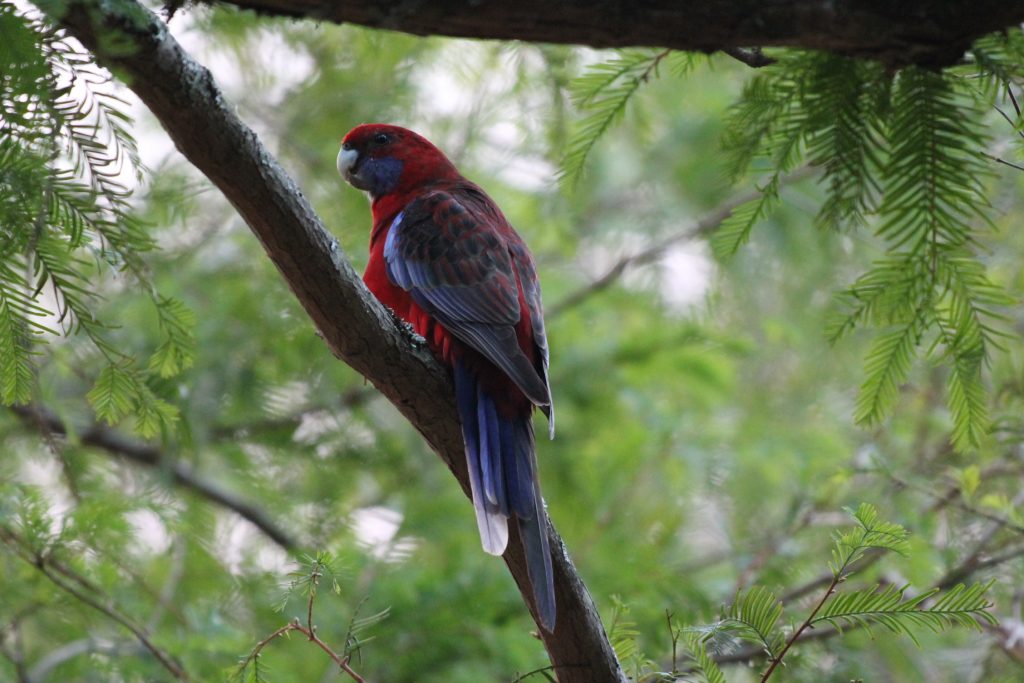
However, generally parrots have been a pretty frustrating lot to photograph…until this past week when we travelled to Sydney where I gave a talk at Western Sydney University’s Hawkesbury Institute of the Environment. Our hosts there, Jonathan and Krista Plett recommended that Deb and I head off to the Blue Mountains Botanic Garden one afternoon, and we were not disappointed. Indeed, the parrots there were very cooperative for the camera, with two species in particular making spectacular subjects: the Australian King-Parrot and the Crimson Rosella.
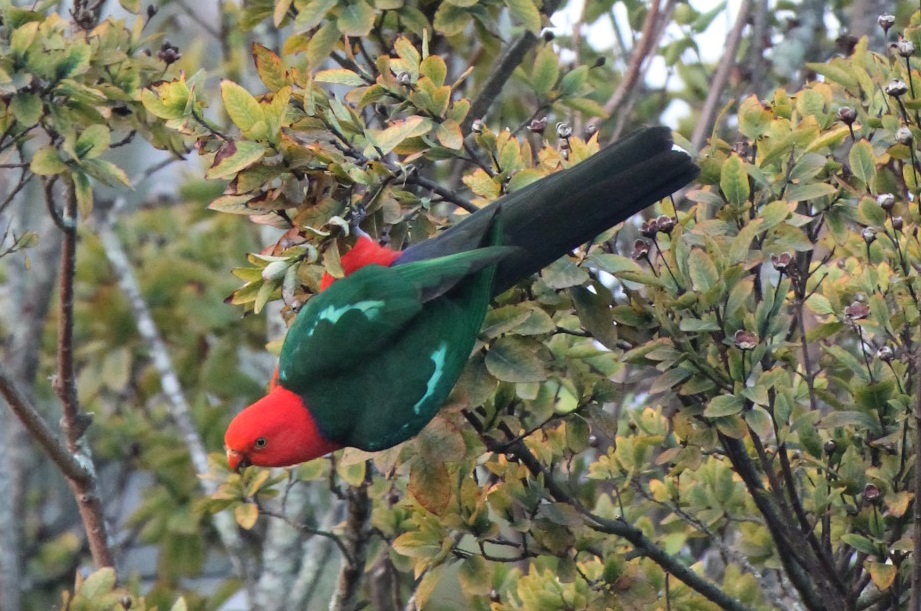
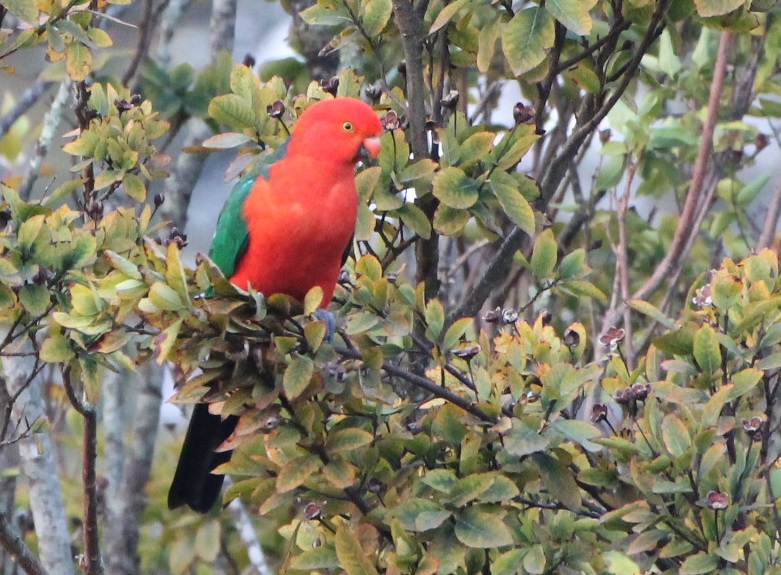
Australian King-Parrot
Crimson Rosellas
Crimson Rosella


As you’ll see in the video below, the Australian King-Parrot is not afraid to make its presence known, and likewise it was fun watching the foraging Crimson Rosellas. Almost like watching captive parrots, but different. Indeed, most of the time here the parrots go screaming right by me in flight – wild and free!
Bird of the week – the kookaburra

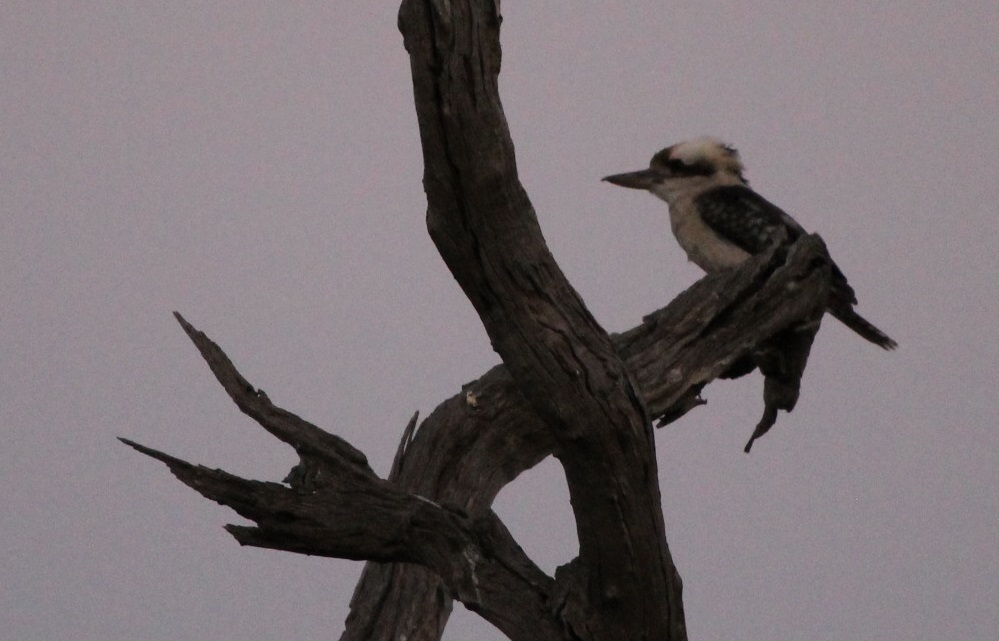
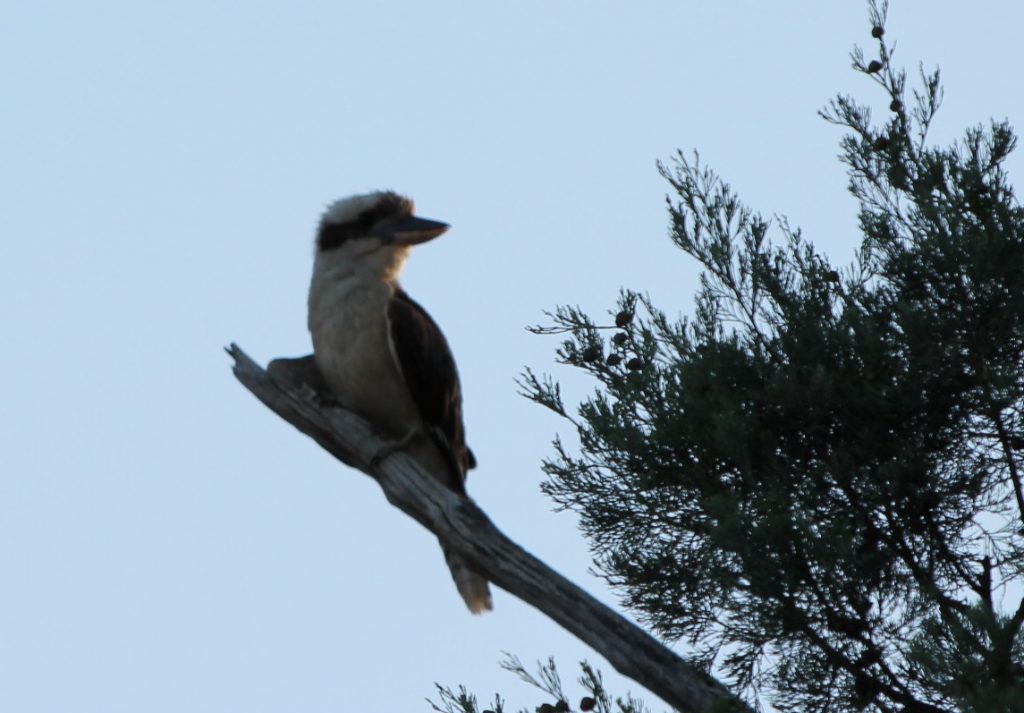
I was less than a week on Australian soil, when I found myself staring up at a…kookaburra. A quintessential Australian bird, if there ever was one! I could hardly believe my eyes, there it was just sitting there looking at me at the same forest near Coolamon where I first saw the willie wagtail, and had a mythical encounter with a swamp wallaby – the Kindra State Forest. Here is the picture I got of that bird:

Since then kookaburras have been everywhere, but I never seem to know where to look for them. They just show up. This one (below) we saw near the koala preserve at Narrandera – where we saw koalas too.

The laughing bit seems to happen mostly in the evening. One warm summer night as we drove to the end of a road somewhere in the middle of nowhere, we heard a small chorus of laughing kookaburras, as recorded in the video below. Note the video is for sound only – no kookaburras appear – but you can sure hear them!


The kookaburra was made famous by this laughing, as immortalized in a children’s poem written by Marion Sinclair in 1932 for a contest being put on by the Victorian Girl Guides. The poem won the contest and was sung at the World Jamboree in Frankston, Victoria in 1934. Now it is well known around the world. In case you don’t know the lyrics, I’ve put them down for ya!

******

Kookaburra sits on the old gum tree,
Merry merry king of the bush is he.
Laugh, Kookaburra, laugh, Kookaburra,
Gay your life must be!

Kookaburra sits on the old gum tree,
Eating all the gum drops he can see.
Stop Kookaburra, stop Kookaburra
Save some there for me!

Kookaburra sits on the old gum tree,
Counting all the monkeys he can see.
Laugh Kookaburra, laugh Kookaburra
That’s not a monkey, that’s me!

******

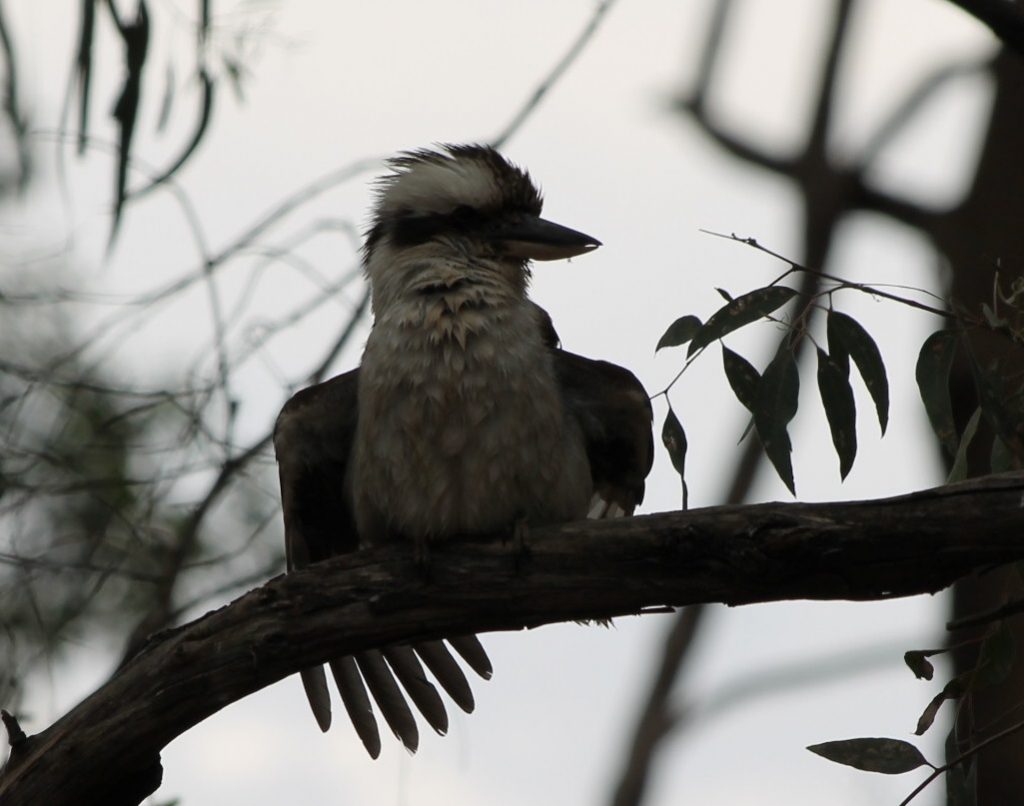
Of course, there are no monkeys in Australia. However, the gum tree (= eucalyptus) is the most common tree around, and there are many different types of gum trees and I suppose kookaburras sit in all of them at one time or another. However, the one I see nearly every day driving to Charles Sturt University is usually on a wire when I spot him.

And check out the perch this kookaburra has chosen…trying to balance out the universe, perhaps?

Bird of the week – the Willie Wagtail

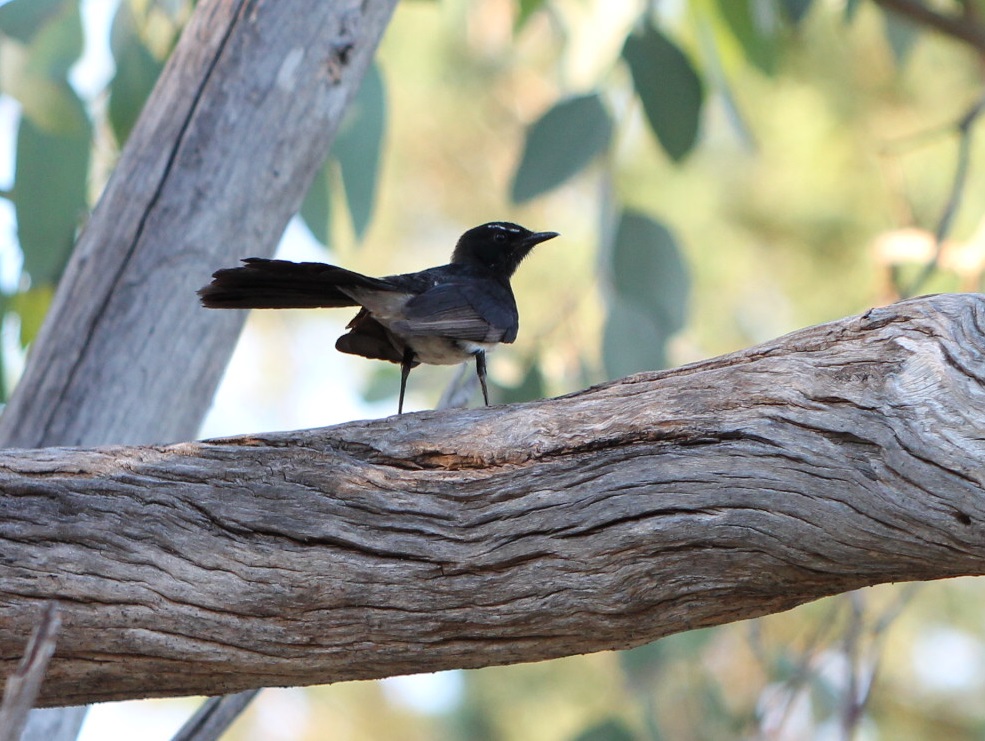
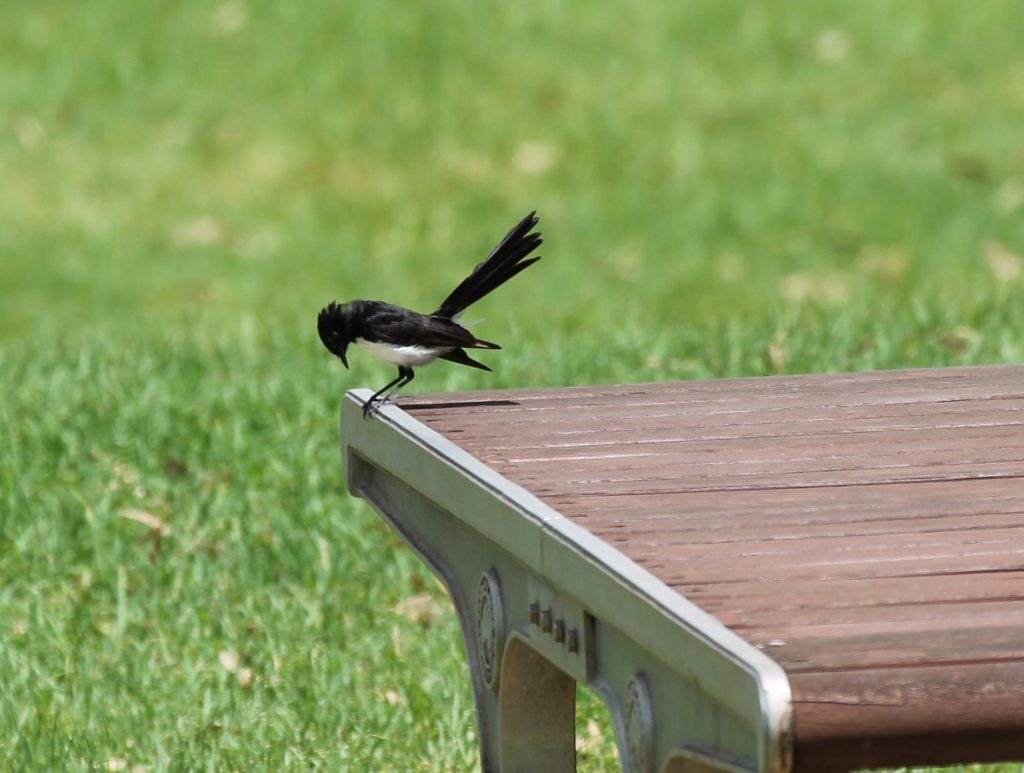
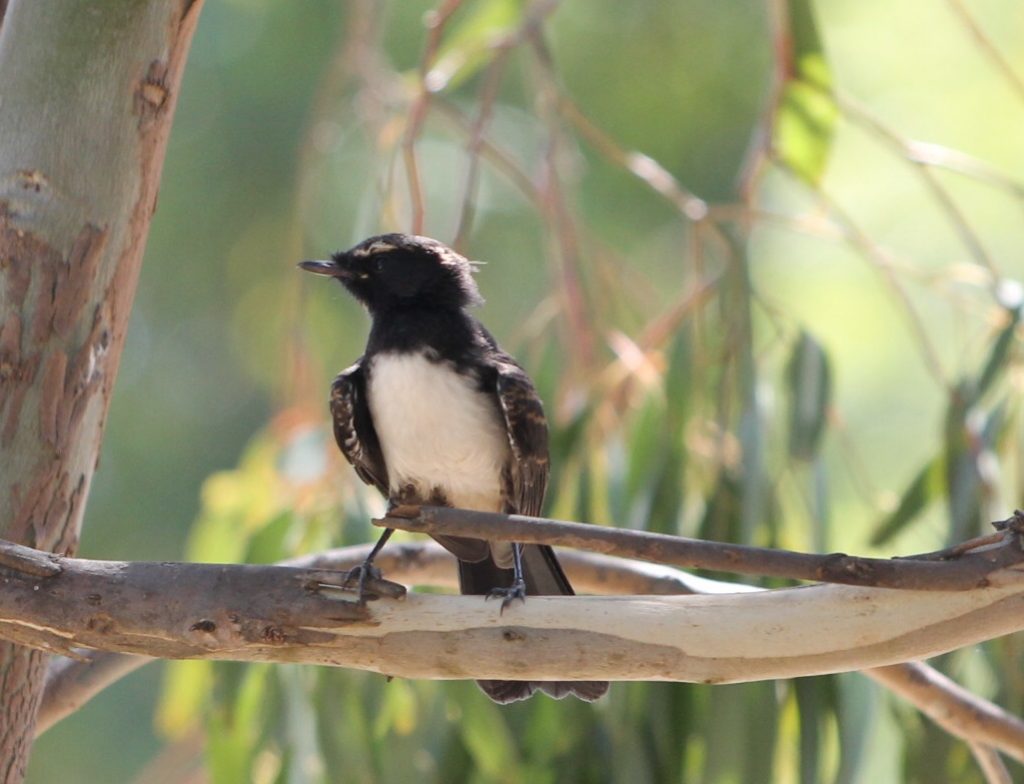
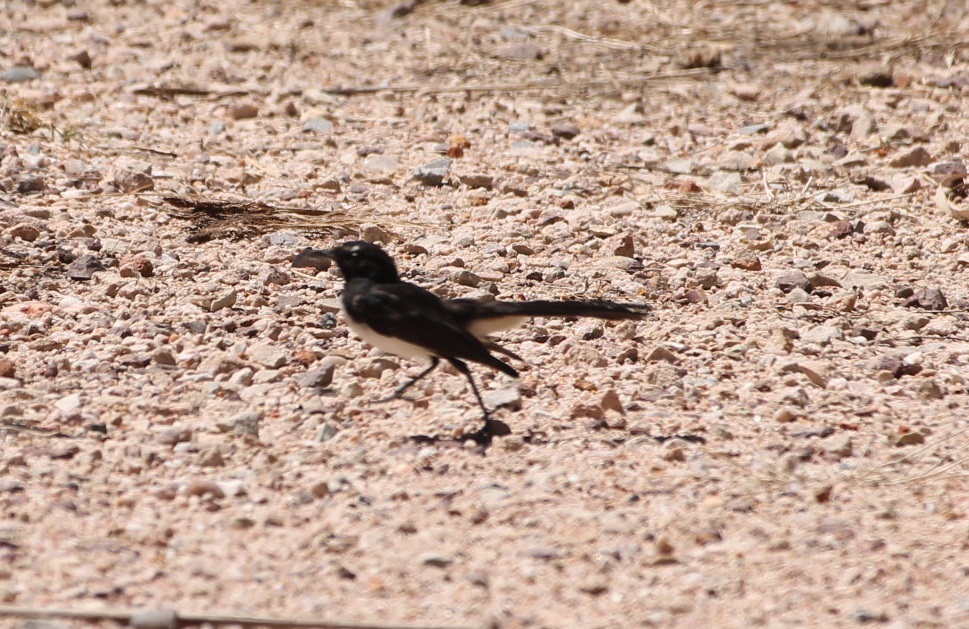
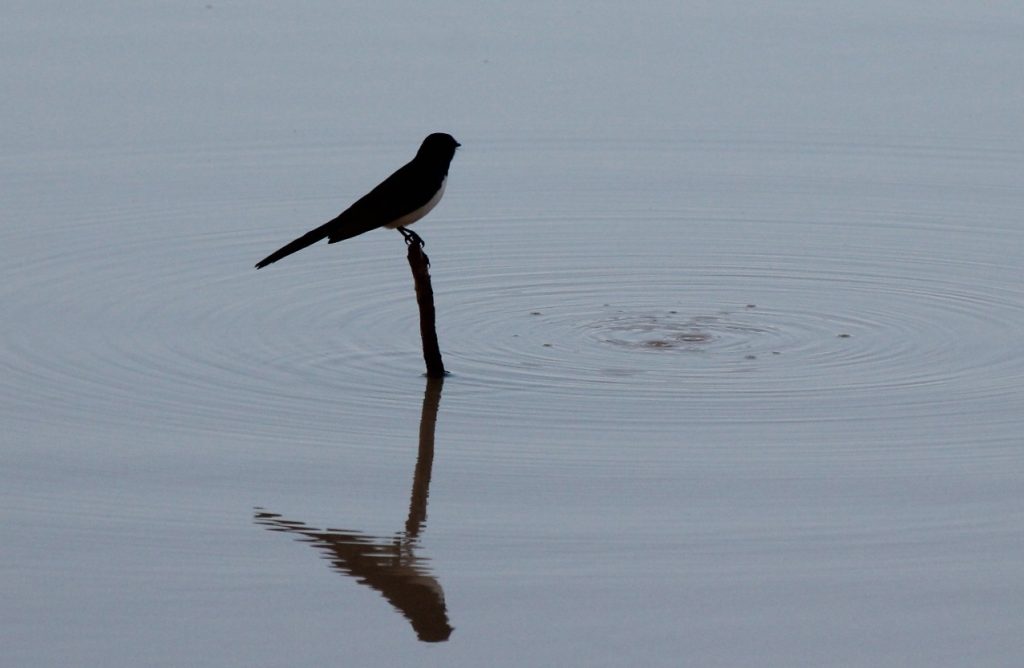
I remember the first time I noticed this bird shortly after I arrived in Australia. It was a small forest reserve near Coolamon and I thought – what an exotic little bird! Perhaps this was a rare sighting??? It did a little dance flipping (wagging) its tail around, and I was charmed!

A few more months in, and I’m still charmed, although I’ve seen this showy little bird almost everywhere. Not only do they do their little dances everywhere (forests, paddocks and lawns), but they attract attention with their chipper chattering.

When you look at their range in Australia, they are likewise found all over, except Tasmania, but apparently they visit Tasmania occasionally on holidays as well.

Not surprisingly, there are many stories about these birds in aboriginal culture. Some aboriginals saw them as a bad omen and would stay home from an expedition if they saw one in the morning. Others felt the Willie Wagtails hanging around at the edge were listening for secrets to tell elsewhere. Willie wagtails inspire modern issues as well – like the story I read of a man who couldn’t sleep because a Willie Wagtail chattered outside his window all night.

Willie Wagtails are the largest and most noticed members of a showy group of birds in Australia – the fantails. All that wagging apparently helps them catch their insect prey somehow. Indeed, they are avid insectivores – I have often seen them leaping athletically after their insect prey.

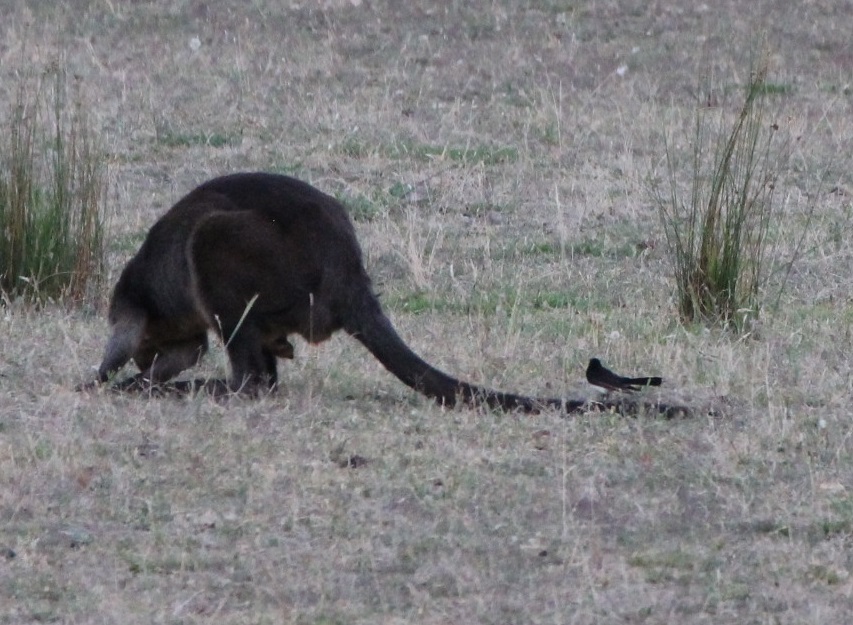
They also seek insect prey around livestock, and wild animals, like on the tail end of this swamp wallaby near Livingstone National Park (see below).

Enjoy the video I took on the Lake Albert beach near our place earlier this week…just a typical Willie Wagtail wagging around in Wagga Wagga.

Bird of the week – the Australian pelican


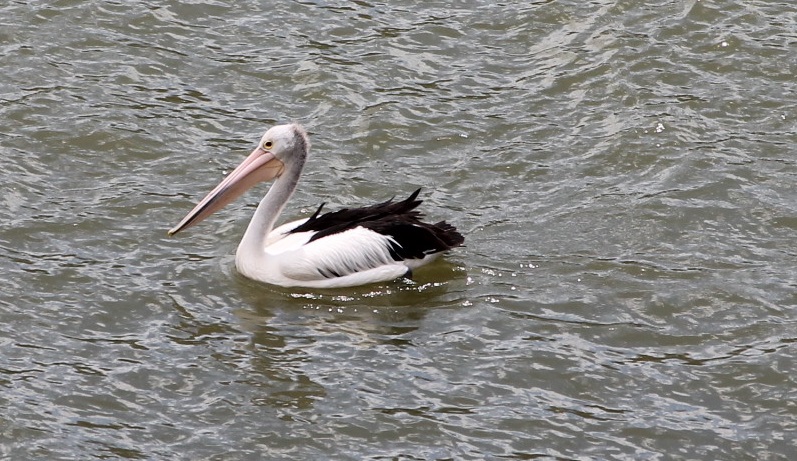
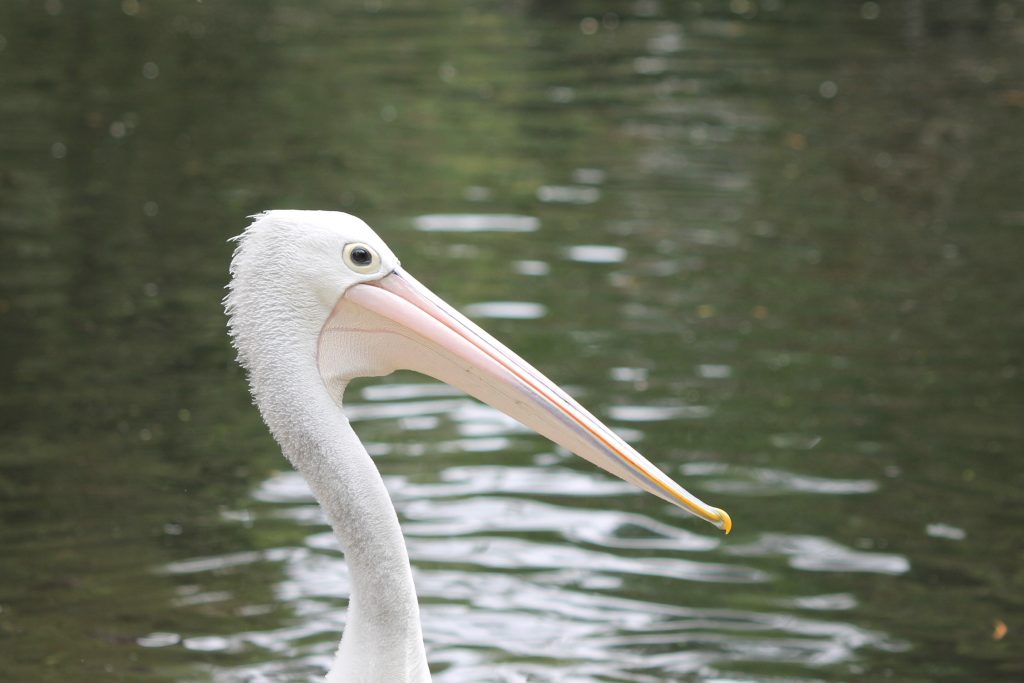
This week’s bird of the week is Australia’s largest water bird – the Australian pelican, weighing as much as 13 kg (28.7 pounds). It is a genuine Australian pelican, and the only pelican found on the island continent. Despite their size, they can actually fly and in fact are quite the wanderers. In fact, one of the first pelicans we saw here in Australia was in a tree in the middle of a sheep pasture – see the lonely pelican in the tree below.

Since then we’ve seen a few pelicans around at various places, always easy to recognize and fun to watch – they definitely have attitude. Not only do fish have much to fear, I think you’d be scared to be another bird in their vicinity. At the same time, they seem to have a comical side.

I got to see the pelicans at the Healesville Sanctuary just after feeding time, and they were a boisterous bunch. I learned from the keeper feeding them that contrary to popular belief, the pelicans don’t use their big flappy bills to store fish – rather they use them as snapping nets to capture fish under water. She feeds them once a day usually, but sometimes they are not so hungry the first time, so she has to go back to give them the rest of their daily heaps of fish.

The wandering nature of the pelicans actually makes sense for a continent that undergoes huge shifts in water availability. We’re in a bit of a drought here now with the expected fall rains yet to fall, so hopefully the pelicans will be able to keep finding nice places to swim and fish as the year goes on.

Treasures in Jars of Clay

I can remember as a kid getting clay from a nearby creek and trying to fashion it into something artistic or at least functional. Yet I was always somewhat limited by the fragile nature of the material. And who has never broken a clay flower pot? Yet flower pots are still useful, and often bear invaluable treasures, growing out of the earth placed in the pot – the same earth that gets transmogrified into us earthlings.

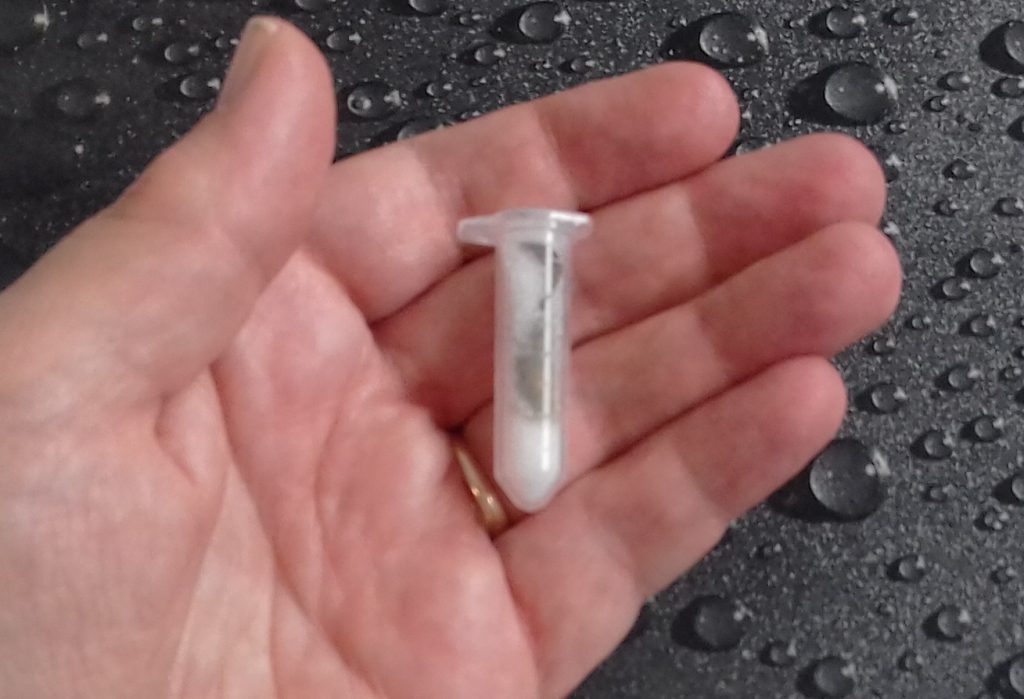
The plants I’m collecting on my sabbatical here in Australia are not full-blown plants with roots, stems, leaves and flowers, and the jars of clay I am using are small one-inch capsules called Eppendorf tubes. Into these tubes, our collectors, wherever they be in the world, place a small fragment of a leaf, no larger than a finger nail, and let it die there in the tube, surrounded by the drying power of silica preservative. Yet, these are indeed treasures, because these tiny leaf fragments, dead as they may be, contain all the DNA for the making of the mile-a-minute plant. When mile-a-minute grows from seed those DNA instructions get transmogrified into a fast-growing vine, capable of flowering, re-rooting, and taking on the many crops it contends with, to our dismay.

Eppendorf tube containing a leaf fragment preserved in silica

“But we have this treasure in jars of clay to show that this all-surpassing power is from God and not from us” (2 Corinthians 4:7)

The Apostle Paul was actually referring to people, not plants, as the jars of clay in his letter to the Corinthians. Like clay, we as people, even the strongest of us, are very fragile. We would do well to treat each other as highly delicate, breakable objects, and holders of treasures beyond all worth, our souls and bodies fashioned by the ultimate Potter. And when we see our own weaknesses, our readiness to be shattered in an instant, we need to remember our Transmogrifier.

When I first met Shiwangni Rao who works at the cubicle just opposite me in the office here in Australia, we had a good conversation. I misheard her on one point though – I thought she said she was from PNG (Papua New Guinea). We have lots of mile-a-minute samples from PNG, so I wasn’t surprised when she said mile-a-minute grew everywhere in her country, but was a bit surprised at how much her people valued it for medicinal products. One person’s weed is another person’s treasure!

It wasn’t until several months later that I learned that Shiwangni was actually from Fiji (not PNG). That discovery will go down as one of the greatest highlights of my sabbatical. You see, DNA, as well as being a complete instruction set also contains history – the history through many generations of an organism. For our research group here, the hub, the nexus, the center of it all, as far as the conquest of the Pacific Islands by mile-a-minute looks to be Fiji. That’s our theory, based on historical records of its spread in the Pacific. Yet we had no samples from Fiji. So when my brilliant host here in Australia, Leslie Weston, found out Shiwangni was from Fiji, she quickly shared the good news with me, including the fact Shiwangni was soon returning home to Fiji for a visit.

Shiwagni Rao (left) and Xiaocheng Zhu (Diego)

And so today, my DNA wizard Xiaocheng Zhu (aka Diego) and I got to explain the process of sample collection to Shiwangni as she as agreed to retrieve some precious samples for us from Fiji. We will provide her with the clay jars and paperwork she needs, so she can bring back treasures for us to test our Fijian theory. In my few short months here in Australia I’ve had the privilege of meeting many fascinating clay jars and will miss them a lot when I travel back to the other side of the globe. And meeting Shawangni has helped to teach me that you never know when your “average co-worker” might become a pearl of great price.

Of course, no one is really “average”, and we are all capable of harboring treasures of infinite value, within mere jars of clay.

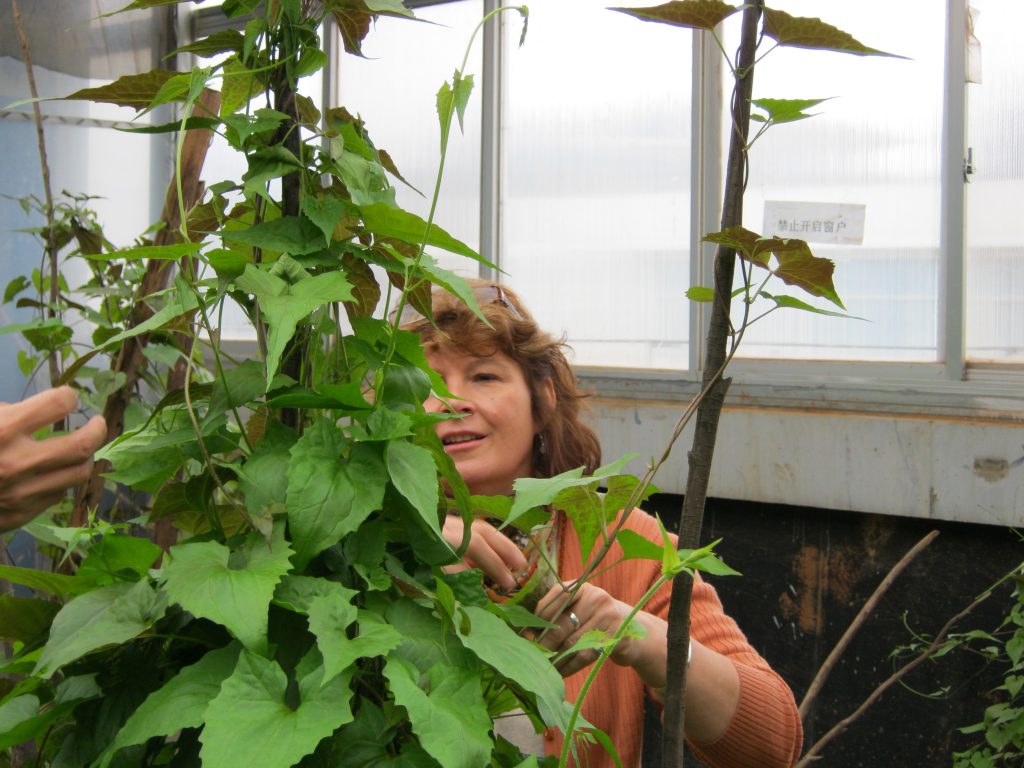
Leslie Weston examining a mile-a-minute plant in Yunnan Province, China