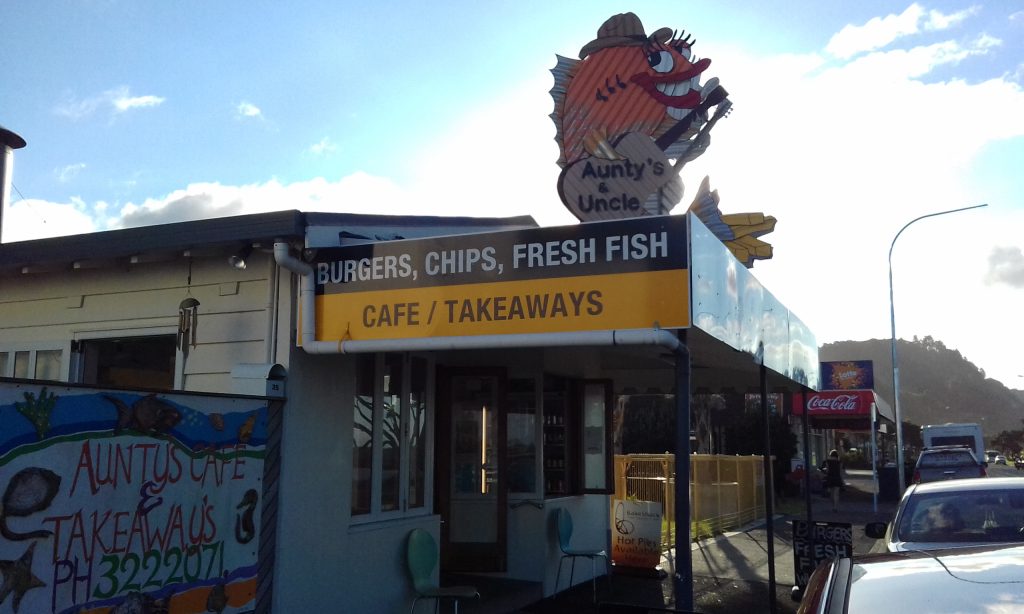
On Saturday my wife and I were on a beautiful beach on the east coast of New Zealand near the small town of Matata. We were enjoying some takeaway seafood there (i.e., that is the Aussi or Kiwi phrase for “take-out food” – we did actually pay for it) from a place called “Aunty’s and Uncle Café and Takeaway” when we noticed an exotic looking bird.
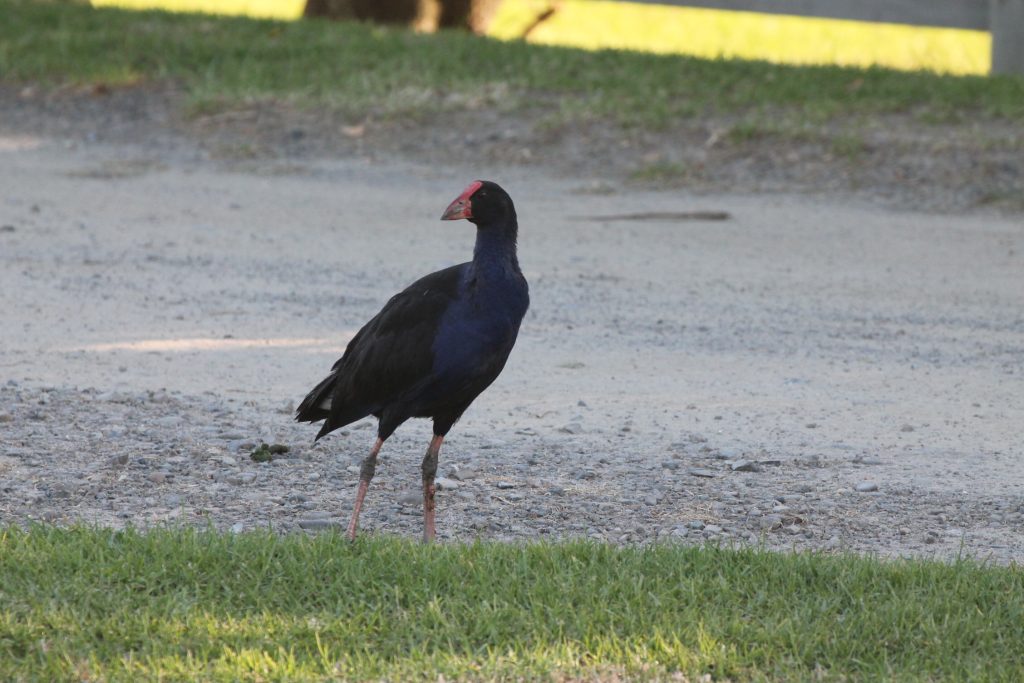
We learned it was the pūkeko. Although we only saw one there in Matata, we were to see many others later. Especially early in the morning the next day as we drove along the windy coastal roads. Apparently pūkeko enjoy foraging beside roads, and we saw at least one pūkeko warning sign in New Zealand. There the warning signs are usually note “wandering” as in “wandering pūkeko” or “wandering kiwi.”
As you might expect, there is quite a road toll and we did see the remains of many unfortunate pūkeko on the road.
I need to quote New Zealand Geographic here to give you further insights on the character and reputation of the pūkeko. This is from an article called “Pūkeko: The Indomitable Swamphen” at
https://www.nzgeo.com/stories/pukeko-the-indomitable-swamphen/
“Popularly regarded as brainless kamikazes lacking all road sense, pukeko are confounding scientists with their complex, flexible social lives. And, while other native birds struggle to survive environmental changes, pukeko seem to take everything in their strutting stride.”
I just noticed the name of the author of the article – Ian Jamieson. I was doing my Ph.D. the same time he was doing a postdoc at Queen’s University in Kingston, Ontario, and then went to New Zealand to continue to work as an Australian ornithologist and write entertaining New Zealand geographic articles like this one. Alas in looking him up, I discovered that he passed away at age 58 in 2015 – see the following for a moving tribute.
http://www.otago.ac.nz/zoology/otago086317.pdf
More details of Ian’s biography are at http://newzealandecology.org/nzje/3307.pdf
The social life that Ian referred to in the article is that they are generally communal nesters. They live in groups whereby it literally does “take a village to raise a child” as they all share care of the communal nests. I read somewhere that they sometimes steal each other’s eggs, but that doesn’t quite make sense because it sounds like the eggs are communal property anyway!
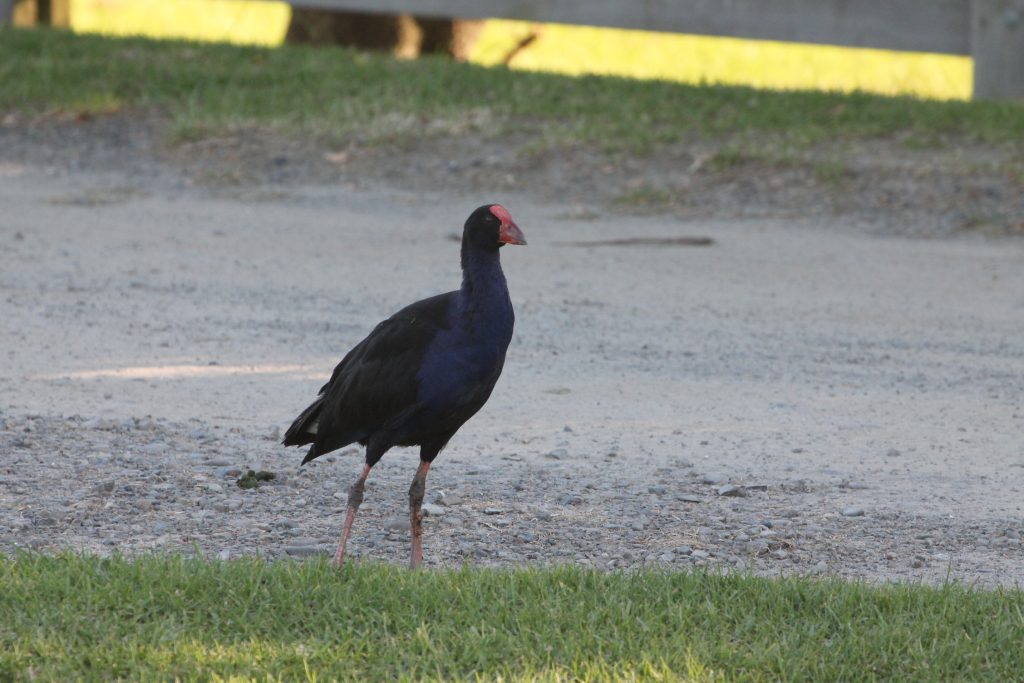
They are very recognizable with their purple-blue body, black wings, red legs, bill and frontal shield. Pūkeko is the Maori name used for the bird in New Zealand. Little did we realize as we beheld this cool bird in New Zealand that we were in for a surprise when we came home to Australia.
Tuesday night when after we had returned to Wagga Wagga that afternoon, I went for a walk by Lake Albert to shake off my jetlag. Jetlag does some bizarre things to people, and as I rubbed my eyes beholding these strutting birds by the lake, I thought, is this really the same bird?
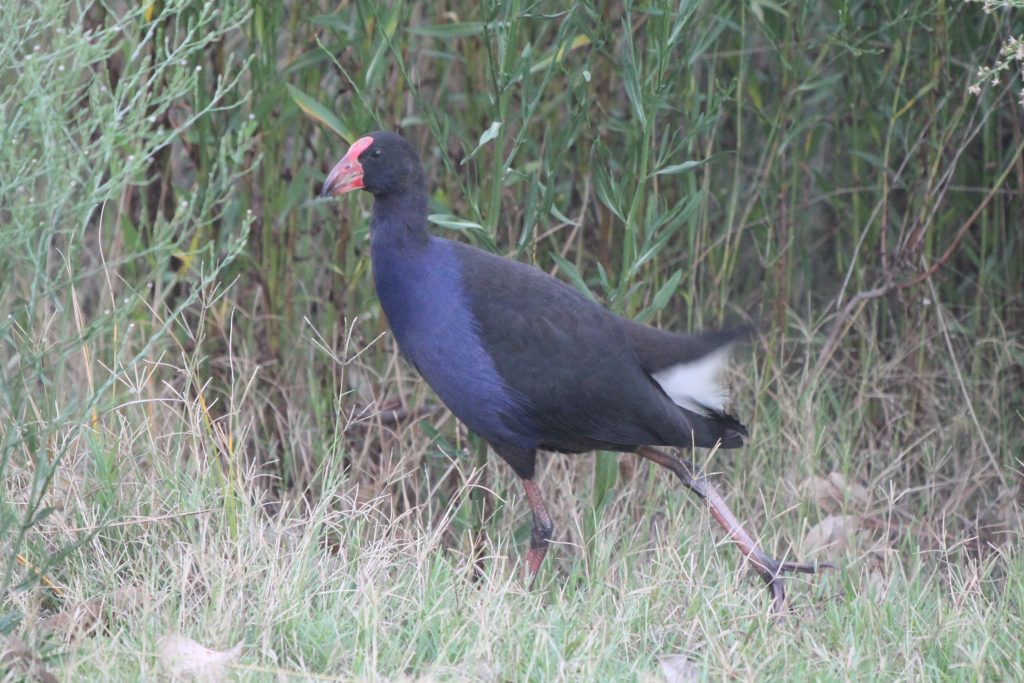
It turns out it is – in fact they are the same subspecies – the Latin name is Porphyrio porphyrio melanotus. In Australia it is known as the purple swamphen. Somehow I prefer the more quirky kiwi name pūkeko.
Now I have gotten over my shock at seeing that this exotic bird is actually found where I live here in Australia, I look forward to many more times of watching these guys strut around like they own the place. In fact, they are thought to have flown over from Australia to New Zealand about 1000 years ago, although their history of how they got where they are is somewhat mysterious. Because of their swimming and quick trotting ability they almost appear flightless (when I first saw the one in Matata I foolishly said to Deb – look at that flightless bird!) but they occur on some remote islands requiring strong flight and an indomitable spirit to reach!
They are just the kind of bird that you will never fully understand, but my old colleague from Queen’s University, Ian Jamieson certainly had a pretty good handle on these quirky birds with a real zest for life. Ian certainly had a zest for life himself (and was a bit quirky), and I remember him fondly as a fun-loving, always good-natured human being from the those good old days we shared back at Queen’s University.